0%

Table of Contents

Perovskite solar cells represent a revolutionary advancement in photovoltaic technology, offering a compelling alternative to traditional silicon-based solar panels. These cells boast the potential for higher efficiency, lower manufacturing costs, and increased versatility, making them a key focus in the global transition towards sustainable energy. The unique crystalline structure of perovskites allows for exceptional light absorption and charge carrier mobility, driving research and development efforts worldwide.

The growing demand for renewable energy sources, fueled by climate change concerns and dwindling fossil fuel reserves, has placed immense pressure on the solar energy sector. Traditional silicon solar cells, while established, are energy-intensive to produce and relatively expensive. Perovskite solar cells address these limitations by offering a potentially simpler and more cost-effective manufacturing process, opening doors for wider adoption of solar energy, particularly in developing nations.

Understanding the intricacies of perovskite solar cell technology – from material composition to device architecture – is crucial for researchers, investors, and policymakers alike. Successful deployment hinges on addressing remaining challenges related to long-term stability and scalability, areas where significant progress is continually being made. Ultimately, perovskite solar cells are poised to reshape the landscape of renewable energy, playing a pivotal role in building a cleaner and more sustainable future.

Advancements in Perovskite Solar Cell Technology for Sustainable Energy Solutions

Introduction to perovskite solar cell

Advancements in Perovskite Solar Cell Technology for Sustainable Energy Solutions

The core of a perovskite solar cell lies in its ability to efficiently convert sunlight into electricity using a unique material structure. Unlike traditional silicon, perovskites are a class of materials with a specific crystal structure that allows for exceptional light absorption and charge transport properties. This allows for potentially much higher efficiencies in converting sunlight to electricity than conventional methods.

The development of perovskite solar cell technology is rapidly evolving, with research focused on improving both efficiency and long-term stability. Initial breakthroughs showcased promising performance, however, concerns regarding degradation from moisture and oxygen necessitated intensive research into encapsulation techniques and material compositions. Current advancements are significantly addressing these issues, paving the way for commercial viability.

Global Relevance and Challenges

The global push for decarbonization and the imperative to mitigate climate change are driving unprecedented demand for renewable energy solutions. Solar energy, as one of the most readily available and abundant resources, is central to this transition. The International Renewable Energy Agency (IRENA) estimates that solar power capacity needs to increase exponentially in the coming decades to meet climate goals, emphasizing the need for innovative technologies like perovskite solar cells.

Despite the immense potential, several challenges hinder the widespread adoption of perovskite solar cells. Long-term stability remains a key concern, with degradation occurring due to factors like moisture, oxygen, and UV light exposure. Scaling up production while maintaining consistent quality and performance is another hurdle. The presence of lead in some perovskite compositions also raises environmental concerns, prompting research into lead-free alternatives.

The World Bank has identified access to affordable and reliable energy as a critical factor in poverty reduction and economic development. perovskite solar cell technology, with its potential for low-cost manufacturing, could play a transformative role in providing electricity to underserved communities and fostering sustainable growth in developing regions. Addressing these challenges will be crucial to unlocking the full potential of this promising technology.

Defining perovskite solar cell Technology

At its heart, a perovskite solar cell is a type of thin-film solar cell that utilizes a perovskite-structured compound as the light-harvesting active layer. Perovskites are materials that have a specific crystal structure similar to that of calcium titanate (CaTiO3), hence the name. The most commonly used perovskite material is a hybrid organic-inorganic lead or tin halide-based compound.

The key to a perovskite solar cell’s efficiency lies in its ability to absorb light across a broad spectrum and efficiently convert it into electrical energy. Unlike silicon, perovskites don’t require complex and energy-intensive purification processes for manufacturing. The process often involves solution processing techniques, such as spin-coating or blade-coating, making it significantly cheaper and faster than traditional silicon solar cell production. This ease of manufacturing aligns with humanitarian needs for rapid deployment of energy solutions.

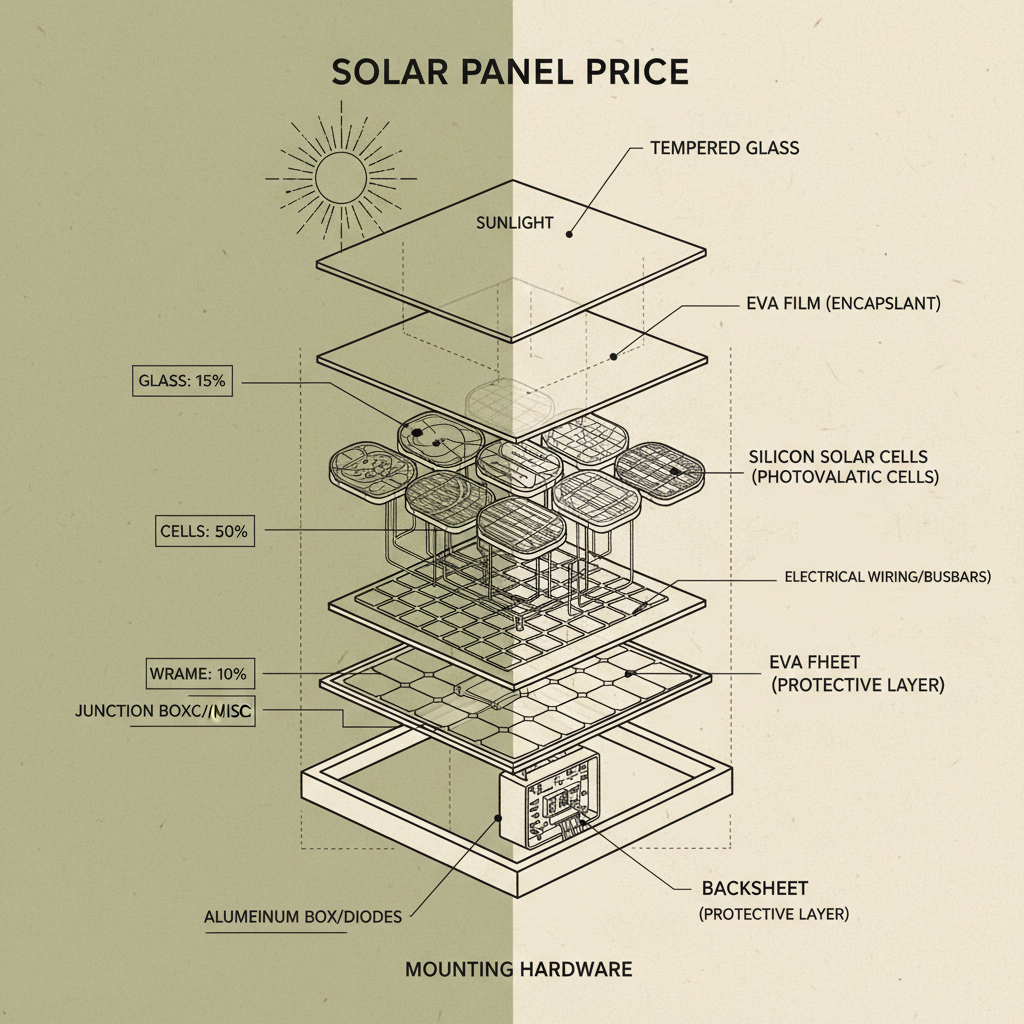
The basic architecture of a perovskite solar cell generally consists of several layers: a transparent conductive oxide (TCO) electrode, an electron transport layer (ETL), the perovskite absorber layer, a hole transport layer (HTL), and a metal back electrode. Each layer plays a crucial role in facilitating charge separation and transport, ultimately leading to the generation of electricity. Further advancements focus on optimizing the interfaces between these layers to minimize energy loss and enhance overall performance.

Key Factors Influencing Performance

Several key factors determine the performance and viability of perovskite solar cells. These include the material composition of the perovskite layer, the quality of the film formation, and the efficiency of charge extraction at the interfaces. Optimizing these parameters is crucial for achieving high power conversion efficiencies.

Here's a breakdown of important factors:

Power Conversion Efficiency of Different perovskite solar cell Methods


Real-World Applications of perovskite solar cell

The versatility of perovskite solar cells extends beyond traditional rooftop installations. Their lightweight and flexible nature opens up opportunities for integration into a wide range of applications, including building-integrated photovoltaics (BIPV), flexible solar panels for portable devices, and even transparent solar cells for windows.

In post-disaster relief operations, rapidly deployable perovskite solar cell-powered generators can provide immediate access to electricity for essential services like healthcare and communication. Similarly, in remote industrial zones or off-grid communities, they offer a sustainable and cost-effective alternative to diesel generators. The potential for customized designs also makes them ideal for specialized applications like powering sensors and IoT devices.

Advantages and Long-Term Value Proposition

The advantages of perovskite solar cells are compelling. Reduced manufacturing costs, higher potential efficiencies, and the ability to be manufactured on flexible substrates provide a significant edge over traditional silicon-based technologies. These factors translate to lower energy costs for consumers and a faster return on investment for businesses.

Beyond economic benefits, perovskite solar cells contribute to a more sustainable future by reducing reliance on fossil fuels and minimizing carbon emissions. Their potential to empower communities with access to clean energy fosters social equity and enhances quality of life. The ongoing innovations in material science and device architecture further solidify their long-term value proposition.

Future Trends and Innovations in perovskite solar cell

Research and development in perovskite solar cells are focused on several key areas. These include improving long-term stability through novel encapsulation techniques and compositional engineering, reducing or eliminating the use of lead, and scaling up manufacturing processes to meet growing demand. The integration of perovskites with other materials, such as silicon, to create tandem solar cells is also showing promising results.

Furthermore, advancements in digital fabrication techniques and automation are streamlining the manufacturing process, driving down costs and improving quality control. The convergence of green energy initiatives, digital transformation, and sustainable materials science is accelerating the pace of innovation in the perovskite solar cell sector.

FAQS

What is the typical lifespan of a perovskite solar cell?

While early perovskite solar cells suffered from rapid degradation, significant progress has been made in improving stability. Current research indicates that well-encapsulated perovskite cells can maintain over 80% of their initial efficiency after 1000 hours of continuous operation under simulated sunlight. Commercial products are expected to achieve a lifespan of 20-25 years, comparable to traditional silicon panels, through continued material and encapsulation advancements.

Are perovskite solar cells environmentally friendly?

The presence of lead in many high-performing perovskite compositions is a significant environmental concern. However, researchers are actively developing lead-free perovskite materials using elements like tin or bismuth. Furthermore, the lower energy requirements for manufacturing perovskite cells, compared to silicon, contribute to a smaller overall carbon footprint. Proper recycling and end-of-life management are also crucial for minimizing environmental impact.

How do perovskite solar cells perform in low-light conditions?

Perovskite solar cells generally exhibit excellent performance in low-light conditions, often outperforming silicon-based cells. This is due to their broader spectral absorption and higher charge carrier mobility. This makes them suitable for indoor applications, such as powering IoT devices, as well as regions with frequent cloudy weather. They are able to generate electricity efficiently even with diffused or indirect sunlight.

What is the current efficiency of perovskite solar cells compared to silicon?

The highest reported efficiency for a perovskite solar cell has surpassed 25.7% in laboratory settings, approaching the efficiency of commercially available silicon panels. While silicon panels have a longer history of optimization, the rapid pace of development in perovskite technology suggests that they could surpass silicon's efficiency in the near future. Tandem cells combining perovskites and silicon are also showing efficiencies exceeding 30%.

How does the cost of perovskite solar cells compare to silicon?

The potential for lower manufacturing costs is a key advantage of perovskite solar cells. The solution-processing techniques used to create perovskite films require less energy and simpler equipment than the complex processes needed for silicon wafer production. Although current production costs are still higher due to scaling challenges, projections indicate that perovskite solar cells could be significantly cheaper than silicon within the next few years.

Where can I find more information about perovskite solar cell technology?

Several reputable sources provide in-depth information about perovskite solar cell technology. You can explore resources from organizations like the National Renewable Energy Laboratory (NREL), the International Renewable Energy Agency (IRENA), and leading universities conducting perovskite research. Additionally, scientific journals such as ‘Nature Energy’ and ‘Advanced Materials’ publish cutting-edge research in this field.

Conclusion

perovskite solar cell technology represents a paradigm shift in the renewable energy landscape, offering a compelling combination of high efficiency, low cost, and versatility. Addressing the remaining challenges related to long-term stability and environmental impact will be critical for realizing its full potential and accelerating its widespread adoption. The ongoing research and development efforts, coupled with supportive policies and investments, are paving the way for a future powered by sustainable and affordable solar energy.

As perovskite solar cell technology matures, we can expect to see its integration into a diverse range of applications, from powering individual homes and businesses to supporting large-scale energy grids. Continued innovation in material science, manufacturing techniques, and device architectures will unlock new opportunities for enhancing performance and reducing costs. By embracing this groundbreaking technology, we can move closer to a cleaner, more sustainable, and equitable energy future for all. Visit our website: www.benjiusolar.com

David Miller

David Miller

David Miller is the North American Sales Director for Hebei BenJiu New Energy Technology. With over 15 years of experience in the renewable energy sector, David specializes in building strong customer relationships and expanding market reach. Before joining BenJiu, he held key positions at SunPower and Tesla, where he focused
Previous Exploring the Rise and Benefits of Advanced Solar Power Systems
Next Understanding Solar Panel Dimensions for Optimal Renewable Energy Systems