0%

Table of Contents

Solar panel dimensions are a critical, yet often overlooked, aspect of renewable energy system design and implementation. Understanding these dimensions – length, width, and thickness – impacts everything from installation feasibility and energy yield optimization to transportation logistics and cost-effectiveness. As global demand for clean energy surges, and solar energy becomes increasingly central to meeting climate goals, a thorough comprehension of solar panel dimensions is paramount for installers, engineers, policymakers, and consumers alike. This understanding is no longer merely a technical detail, but a fundamental requirement for accelerating the global energy transition.

The relevance of solar panel dimensions extends beyond simply fitting panels onto rooftops. The increasing prevalence of large-scale solar farms, building-integrated photovoltaics (BIPV), and off-grid solar solutions demands careful consideration of space constraints, weight limitations, and structural integrity. Data from the International Renewable Energy Agency (IRENA) indicates a consistent growth in global solar capacity, necessitating streamlined installation processes and optimized land usage. Standardization of solar panel dimensions, and awareness of available options, facilitates these goals.

Furthermore, innovation in solar panel technology—such as bifacial panels and flexible solar films—introduces new dimensional considerations. This is particularly important for specialized applications like mobile solar chargers, portable power solutions for disaster relief, and solar-powered vehicles. Properly addressing solar panel dimensions helps unlock the full potential of these emerging technologies, driving down costs and making solar energy more accessible to a wider population.

Understanding Solar Panel Dimensions for Optimal Renewable Energy Systems

Introduction to Solar Panel Dimensions
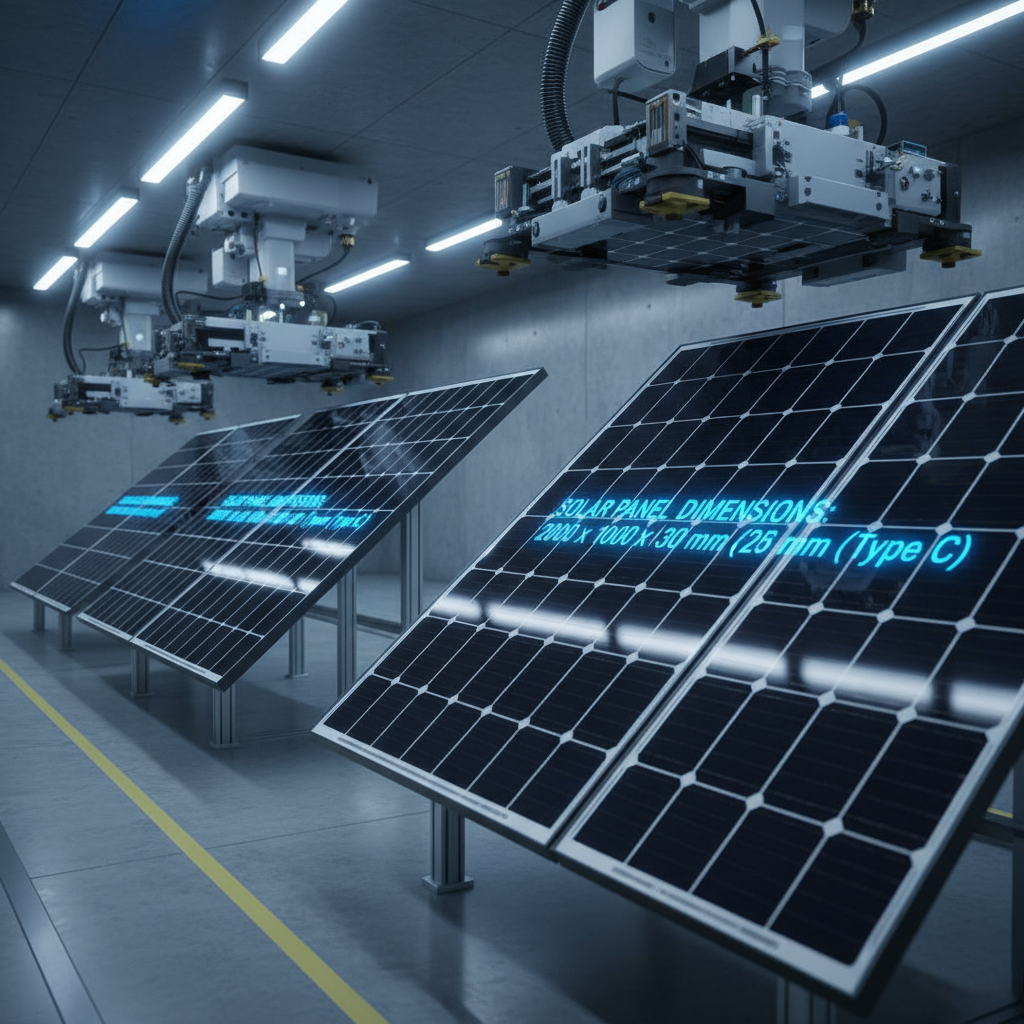
Understanding Solar Panel Dimensions for Optimal Renewable Energy Systems

Understanding solar panel dimensions is fundamental to maximizing energy production within given spatial constraints. Different panel sizes and form factors cater to diverse installation scenarios, from residential rooftops to utility-scale solar farms. Choosing the right panel dimensions directly impacts system efficiency, installation costs, and the overall aesthetic integration of solar energy solutions.

The precise measurement of solar panel dimensions is crucial for accurate system design and material estimation. Incorrect measurements can lead to significant errors in racking and wiring configurations, ultimately reducing performance and increasing project expenses. Therefore, a thorough understanding of these measurements – length, width, and depth – is vital for a successful and optimized solar installation.

Defining Solar Panel Dimensions

Solar panel dimensions generally refer to the physical size of a photovoltaic (PV) module, typically expressed in length, width, and thickness (depth). These dimensions are standardized to facilitate compatibility with mounting systems and simplify installation. Common units of measurement include millimeters (mm) and inches (in). However, it's crucial to consider the frame dimensions versus the actual solar cell area.

Beyond the core dimensions, other related measurements include the cell layout, busbar spacing, and junction box size. These details are important for optimizing electrical connections and ensuring proper system functionality. Manufacturers provide detailed datasheets outlining all relevant dimensions for each model, enabling installers to make informed decisions.

The concept of solar panel dimensions is inextricably linked to the efficiency of energy conversion. The active area, or the portion of the panel containing the solar cells, plays a direct role in the amount of sunlight captured and converted into electricity. Therefore, optimizing the size and shape of the panel, relative to the cell area, is a critical aspect of design.

Key Factors Influencing Solar Panel Dimensions

Several factors influence the dimensions of solar panels. The type of solar cell technology – monocrystalline, polycrystalline, or thin-film – directly impacts the size and shape of the individual cells, and consequently, the overall panel dimensions. Monocrystalline cells, known for their high efficiency, are often smaller and require less material, resulting in compact panel designs.

The panel’s power output is also a key driver. Higher-wattage panels generally require larger cell areas and therefore larger overall dimensions. However, advancements in cell technology are allowing manufacturers to increase power output without significantly increasing panel size. This is a continuous area of innovation.

Furthermore, the intended application influences dimension choices. Residential rooftop panels prioritize fitting within limited space, while large-scale solar farm panels may emphasize maximizing surface area for energy production. BIPV panels require dimensions tailored to integrate seamlessly into building facades and roofing materials.

Practical Applications & Scalability

The selection of appropriate solar panel dimensions has profound implications for scalability and project viability. For large-scale solar farms, standardized panel dimensions facilitate efficient racking and wiring layouts, reducing installation time and labor costs. Conversely, irregular panel sizes can lead to complex and costly installation procedures.

In residential applications, maximizing the use of available roof space is paramount. Smaller, more compact panels may be preferred for complex roof geometries, while larger panels can provide higher power output in a limited area. The balance between these factors determines the optimal panel dimensions for each individual installation.

Comparison of Solar Panel Dimensions by Technology


Global Implementation and Use Cases

Across the globe, the application of diverse solar panel dimensions is evident. In densely populated urban areas, BIPV solutions utilizing smaller, custom-shaped panels are gaining traction. Conversely, large-scale solar farms in arid regions often employ standardized, high-wattage panels to maximize energy output on vast tracts of land.

In post-disaster relief operations, portable solar generators utilizing compact, lightweight panels provide critical power to affected communities. Remote industrial zones, often lacking grid connectivity, rely on modular solar arrays with adaptable panel dimensions to meet specific energy needs. These examples demonstrate the versatility and adaptability of solar technology.

Advantages and Long-Term Value

Optimizing solar panel dimensions yields significant long-term benefits. Efficient space utilization translates to higher energy yields, reducing the overall cost per watt. Streamlined installation processes minimize labor expenses, and standardized dimensions simplify maintenance and repairs. These factors contribute to a lower levelized cost of energy (LCOE), making solar power more competitive with traditional energy sources.

Beyond economic advantages, embracing appropriate solar panel dimensions promotes sustainability and environmental responsibility. Reduced land usage minimizes ecological impact, and longer-lasting panels with robust designs enhance system reliability and reduce waste. Ultimately, informed decisions regarding solar panel dimensions contribute to a more resilient and sustainable energy future.

Furthermore, the adoption of optimized solar panel dimensions fosters innovation and technological advancement. By challenging conventional design constraints, engineers are continuously developing more efficient and cost-effective solar solutions, driving down costs and expanding access to clean energy.

Future Trends and Innovations

Several emerging trends are poised to reshape the landscape of solar panel dimensions. The development of perovskite solar cells, known for their high efficiency and potential for flexible designs, promises to unlock new possibilities in panel form factors. Bifacial panels, capable of generating electricity from both sides, are becoming increasingly popular, necessitating optimized dimension considerations for maximizing energy capture.

The integration of digital technologies, such as advanced modeling software and automated manufacturing processes, is enabling the creation of customized solar panels tailored to specific applications. This trend towards personalization will further emphasize the importance of precise dimensional control and optimization.

Moreover, advancements in materials science are leading to the development of lightweight and durable panel materials, facilitating easier installation and reducing structural requirements. These innovations will undoubtedly drive down costs and expand the applications of solar energy across a wider range of sectors.

Overview of Factors Affecting Solar Panel Dimension Optimization

Cell Technology Application Type Environmental Constraints Cost-Effectiveness Score (1-10)
Monocrystalline Residential Rooftop Limited Space 8
Polycrystalline Commercial Flat Roof Wind Load 7
Thin Film BIPV (Building Integrated Photovoltaics) Aesthetic Requirements 6
Bifacial Large-Scale Solar Farm Ground Clearance 9
Half-Cut Cell Hybrid Systems Shading Tolerance 8
Perovskite Portable Solar Chargers Weight & Flexibility 7

FAQS

What are the standard solar panel dimensions for residential rooftop installations?

Standard residential solar panels typically measure around 65-70 inches in length and 39-40 inches in width. Thickness usually ranges from 1.5 to 2 inches. However, dimensions can vary slightly depending on the manufacturer and cell technology used. It’s crucial to verify the exact dimensions specified on the panel’s datasheet before installation to ensure compatibility with your racking system and roof layout.

How do solar panel dimensions affect the power output of a system?

Larger panels generally have a greater surface area for capturing sunlight, resulting in higher power output. However, simply increasing dimensions isn't the only factor. The efficiency of the solar cells themselves plays a critical role. Optimizing the balance between panel dimensions and cell efficiency is key to maximizing energy production per square foot. Different technologies will have different output.

What is the impact of panel dimensions on shipping and handling costs?

Larger panels can be more challenging and expensive to ship and handle due to their increased size and weight. They may require specialized packaging and transportation methods. Standardized dimensions can help minimize these costs by optimizing palletization and loading efficiency. Weight must also be considered, affecting overall shipping expenses.

Are there any specific dimension requirements for BIPV (Building Integrated Photovoltaics)?

BIPV panels often require custom dimensions to seamlessly integrate into building materials like facades and roofing tiles. These panels are typically smaller and more flexible than traditional solar panels, allowing them to conform to the building’s architecture. Precise dimensional accuracy is essential for a successful BIPV installation.

How does the thickness of a solar panel affect its durability?

Panel thickness contributes to its overall structural integrity and resistance to environmental factors like hail and wind. Thicker panels generally offer greater durability, but they also add weight. Manufacturers typically use tempered glass and robust framing materials to ensure that panels meet industry standards for durability, regardless of their specific thickness.

What are the emerging trends in solar panel dimension innovation?

Emerging trends include the development of flexible solar panels and larger-format panels with higher power densities. Researchers are also exploring new materials and manufacturing processes to reduce panel thickness and weight without compromising performance. The goal is to create solar panels that are more versatile, efficient, and cost-effective for a wider range of applications.

Conclusion

In conclusion, solar panel dimensions are a critical factor in the successful design, installation, and operation of solar energy systems. From maximizing energy yield and minimizing costs to ensuring structural integrity and promoting sustainability, careful consideration of these dimensions is essential. The interplay between cell technology, application type, environmental constraints, and cost-effectiveness drives the selection of optimal panel dimensions for each unique project.

Looking ahead, continuous innovation in materials science and manufacturing processes will undoubtedly lead to further advancements in solar panel dimensions, unlocking new possibilities for clean energy generation. By staying informed about these trends and embracing best practices in system design, we can accelerate the transition towards a more sustainable and resilient energy future. For further information and to explore our range of solar panel options, visit our website: www.benjiusolar.com

David Miller

David Miller

David Miller is the North American Sales Director for Hebei BenJiu New Energy Technology. With over 15 years of experience in the renewable energy sector, David specializes in building strong customer relationships and expanding market reach. Before joining BenJiu, he held key positions at SunPower and Tesla, where he focused
Previous Advancements in Perovskite Solar Cell Technology for Sustainable Energy Solutions
Next Understanding Solar Panel Size for Optimal Energy Production