Different types of solar panels are rapidly transforming the global energy landscape, offering a pathway towards sustainable power generation and reduced carbon emissions. From residential rooftops to large-scale solar farms, these technologies are becoming increasingly accessible and efficient. Understanding the nuances of each type—monocrystalline, polycrystalline, thin-film, and emerging technologies—is crucial for informed decision-making, whether for homeowners, businesses, or policymakers. This knowledge empowers individuals and organizations to harness the sun's energy effectively and contribute to a cleaner future.
The demand for renewable energy sources is driven by growing concerns about climate change, energy security, and the finite nature of fossil fuels. Solar power, in particular, stands out due to its abundance and scalability. The United Nations Sustainable Development Goal 7 aims to ensure access to affordable, reliable, sustainable, and modern energy for all, and solar energy plays a pivotal role in achieving this goal. Innovations in different types of solar panels continue to drive down costs and improve performance, making solar energy a viable and attractive option for a wider range of applications.
Choosing the right type of solar panel depends on specific needs and circumstances. Factors such as efficiency, cost, space constraints, and aesthetic preferences all come into play. The global market for different types of solar panels is projected to grow significantly in the coming years, fueled by government incentives, technological advancements, and increasing environmental awareness. This presents opportunities for both established industry players and innovative startups.
Introduction to different types of solar panels
Different types of solar panels represent a spectrum of technologies designed to convert sunlight into electricity. These panels differ in their materials, manufacturing processes, efficiency levels, and cost. Broadly, they fall into three main categories: crystalline silicon (including monocrystalline and polycrystalline), thin-film, and emerging technologies like perovskite solar cells. Each category has its own strengths and weaknesses, making it suitable for different applications and environments.
Understanding these distinctions is essential for maximizing the return on investment in solar energy systems. The choice between these different types of solar panels will affect not only the initial cost but also the long-term performance and overall environmental impact. With ongoing research and development, the landscape of solar technology is constantly evolving, with newer and more efficient panels emerging regularly.
Defining different types of solar panels
Different types of solar panels, at their core, are photovoltaic (PV) modules – meaning they directly convert sunlight into electricity using the photovoltaic effect. This effect occurs when photons (light particles) strike a semiconductor material, releasing electrons and creating an electric current. The key differentiating factor among various types lies in the semiconductor material used and the method of its construction.
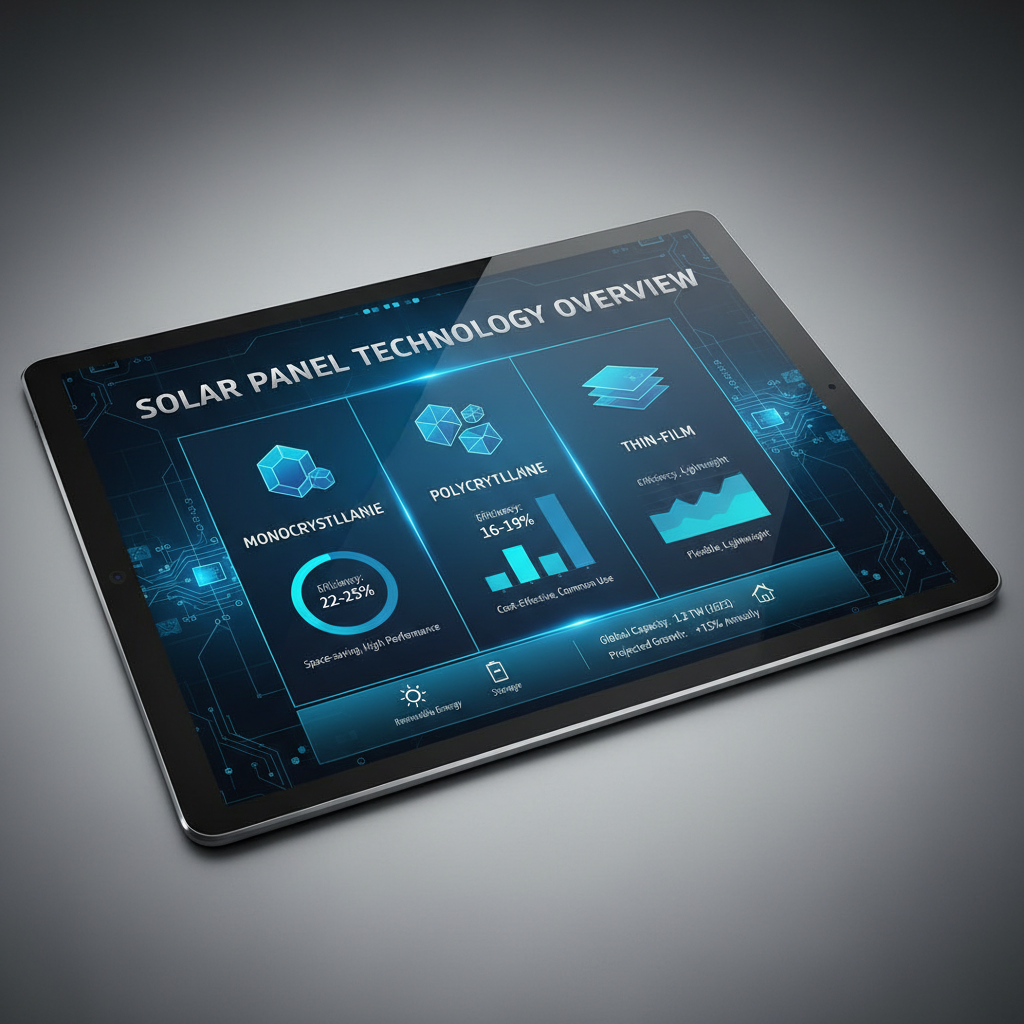
Monocrystalline solar panels are made from a single crystal of silicon, resulting in high efficiency and a sleek, uniform appearance. Polycrystalline panels, on the other hand, are made from multiple silicon fragments melted together, offering a lower cost but slightly reduced efficiency. Thin-film panels utilize materials like amorphous silicon, cadmium telluride, or copper indium gallium selenide (CIGS) deposited in thin layers onto a substrate.
These distinctions extend beyond just the materials; the manufacturing processes, durability, and environmental impact vary significantly across these different types of solar panels, making it crucial to carefully assess needs and prioritize desired characteristics when selecting a system. The rise of perovskite solar cells offers a promising future with potentially high efficiencies at lower costs, though they are still under development.
Key Characteristics of different types of solar panels
Durability is a crucial factor when considering different types of solar panels. Monocrystalline panels generally boast the longest lifespan, often exceeding 25 years, due to their robust construction and resistance to degradation. Polycrystalline panels are also durable but may experience a slightly faster rate of efficiency loss over time. Thin-film panels have varying durability depending on the specific material used, with some exhibiting susceptibility to moisture and UV damage.
Scalability refers to the ease with which a solar system can be expanded or modified. Crystalline silicon panels offer excellent scalability, allowing for the addition of more panels to increase energy production as needed. Thin-film panels, while less scalable in terms of adding individual panels, can be manufactured in flexible forms suitable for large-scale installations on curved surfaces.
Cost efficiency is a major driver in the adoption of different types of solar panels. Polycrystalline and thin-film panels typically have a lower upfront cost than monocrystalline panels, making them attractive for budget-conscious consumers. However, the lower efficiency of these panels may require a larger surface area to generate the same amount of power, potentially increasing installation costs.
Applications of different types of solar panels Globally
The application of different types of solar panels varies significantly depending on the location, energy needs, and available resources. Monocrystalline panels, with their high efficiency, are often favored for residential rooftops where space is limited. They are also increasingly used in commercial and industrial settings requiring maximum power output from a given area.
Polycrystalline panels find widespread use in large-scale solar farms due to their cost-effectiveness. They are particularly prevalent in regions with ample land and abundant sunlight, such as the southwestern United States and Australia. Thin-film panels excel in applications requiring flexible or lightweight solutions, like integrated building photovoltaics (BIPV) and portable solar chargers.
In remote industrial zones lacking grid access, different types of solar panels provide a reliable and independent power source. In post-disaster relief operations, portable solar panels are invaluable for providing emergency power to essential services and communications equipment. Furthermore, different types of solar panels are increasingly used in off-grid communities in developing countries, providing access to clean and affordable electricity.
Efficiency Comparison of different types of solar panels
Advantages and Value Proposition of different types of solar panels
The advantages of adopting different types of solar panels are multifaceted, spanning economic, environmental, and social benefits. Cost savings are a primary driver, as solar energy reduces reliance on expensive fossil fuels and lowers monthly electricity bills. Moreover, solar installations increase property values and contribute to long-term financial security.
From an environmental perspective, different types of solar panels offer a clean and renewable energy source that significantly reduces greenhouse gas emissions and combats climate change. They also minimize air and water pollution associated with traditional power generation methods. The sustainability of solar power contributes to a healthier planet for future generations.
Future Innovations in different types of solar panels
Ongoing research and development efforts are focused on enhancing the efficiency, affordability, and durability of different types of solar panels. Perovskite solar cells are a particularly promising area of innovation, with the potential to achieve efficiencies comparable to or exceeding those of crystalline silicon panels at a lower cost.
Bifacial solar panels, which capture sunlight from both sides, are gaining traction due to their increased energy production. Furthermore, advancements in energy storage technologies, such as battery storage, are enabling greater integration of solar energy into the grid and improving grid stability. The integration of artificial intelligence and machine learning will optimize the performance of different types of solar panels.
Challenges and Solutions in different types of solar panels
Despite the significant advancements in solar technology, challenges remain in widespread adoption. Intermittency – the fluctuating nature of sunlight – is a key concern, requiring reliable energy storage solutions or grid integration strategies. The initial cost of solar installations can also be a barrier for some consumers, although financing options and government incentives are becoming increasingly available.
Supply chain disruptions and the availability of raw materials pose another challenge, particularly for thin-film panels that rely on specific elements like tellurium or indium. Investing in sustainable sourcing practices and exploring alternative materials can mitigate these risks. Addressing concerns about the environmental impact of panel manufacturing and disposal through responsible recycling programs is also crucial.
Furthermore, enhancing public awareness and providing clear information about the benefits of different types of solar panels can drive greater adoption. Continued investment in research and development, coupled with supportive government policies, will pave the way for a more sustainable and solar-powered future.
Summary Table of different types of solar panels Characteristics
| Panel Type |
Efficiency (Typical) |
Cost (Relative) |
Lifespan (Years) |
| Monocrystalline |
20-22% |
High |
25-30 |
| Polycrystalline |
16-18% |
Medium |
20-25 |
| Thin-Film (Amorphous Silicon) |
7-10% |
Low |
10-20 |
| Thin-Film (CIGS) |
17-20% |
Medium |
20-25 |
| Thin-Film (CdTe) |
16-19% |
Low |
15-25 |
| Perovskite (Emerging) |
22-25% (Lab) |
Potentially Low |
5-10 (Early Stage) |
FAQS
Currently, monocrystalline solar panels generally offer the highest efficiency, typically ranging from 20-22%. However, Perovskite solar cells are showing tremendous promise in laboratory settings, with efficiencies reaching over 25%, but they are still in the development phase and not yet widely commercially available. The efficiency of different types of solar panels depends on several factors, including manufacturing processes and environmental conditions.
Yes, thin-film solar panels are particularly well-suited for curved surfaces due to their flexibility. Unlike rigid crystalline silicon panels, they can be manufactured in flexible forms that conform to various shapes. This makes them ideal for applications like building-integrated photovoltaics (BIPV) where solar panels are seamlessly integrated into building facades or roofs.
Generally, thin-film panels are the least expensive upfront, followed by polycrystalline panels, and then monocrystalline panels. However, it's important to consider the efficiency of each type. Because monocrystalline panels are more efficient, you may need fewer of them to generate the same amount of power, which can offset the higher initial cost. Overall system cost, including installation, is key.
The environmental impact varies depending on the type of solar panel. Crystalline silicon panels require energy-intensive manufacturing processes. Thin-film panels, particularly those using cadmium telluride, raise concerns about the use of toxic materials. Responsible manufacturing practices, efficient recycling programs, and the development of more sustainable materials are crucial to minimizing the environmental footprint of solar panel production.
Monocrystalline and polycrystalline panels typically have a lifespan of 25-30 years, with most manufacturers offering a 25-year performance warranty. Thin-film panels generally have a shorter lifespan, ranging from 10-20 years, depending on the specific material and environmental conditions. Perovskite solar cells are still under development, and their long-term durability is being actively researched.
Bifacial solar panels generate electricity from both the front and back sides, increasing their overall energy production. They are particularly effective in environments with reflective surfaces like snow or light-colored roofs. Although generally more expensive than traditional monofacial panels, their increased output can lead to a faster return on investment. They work with all different types of solar panels!
Conclusion
Different types of solar panels represent a vital component of the global transition towards sustainable energy. From the high efficiency of monocrystalline panels to the cost-effectiveness of thin-film options, each type offers unique advantages and is suited for diverse applications. Understanding these differences is key to making informed decisions and maximizing the benefits of solar power. As technology continues to evolve, with breakthroughs in materials science and manufacturing processes, the future of solar energy looks increasingly bright.
Investing in different types of solar panels isn’t just about reducing carbon emissions; it’s about fostering energy independence, creating economic opportunities, and building a more resilient future. We encourage you to explore the possibilities and discover how solar energy can empower you to contribute to a cleaner, more sustainable world. Visit our website at Benjiu Solar to learn more about different types of solar panels and find the perfect solution for your needs.