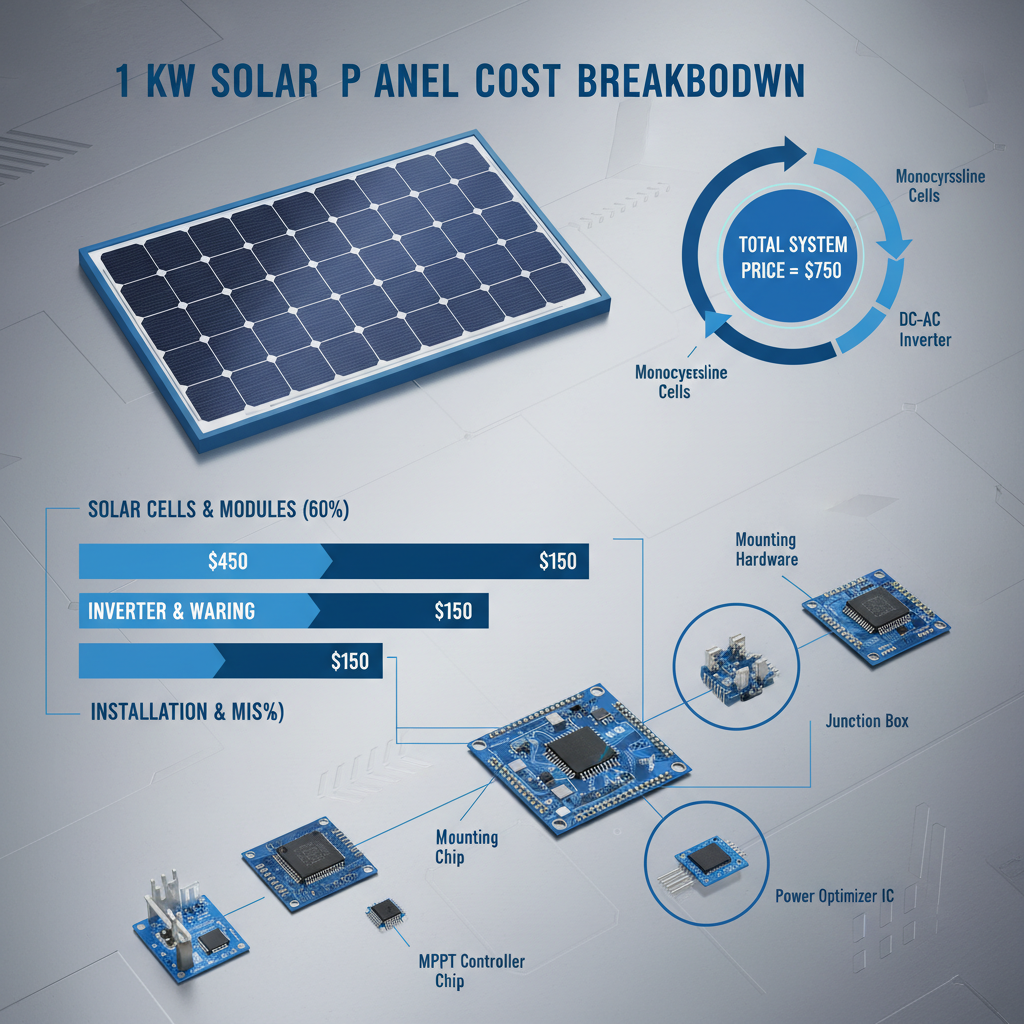
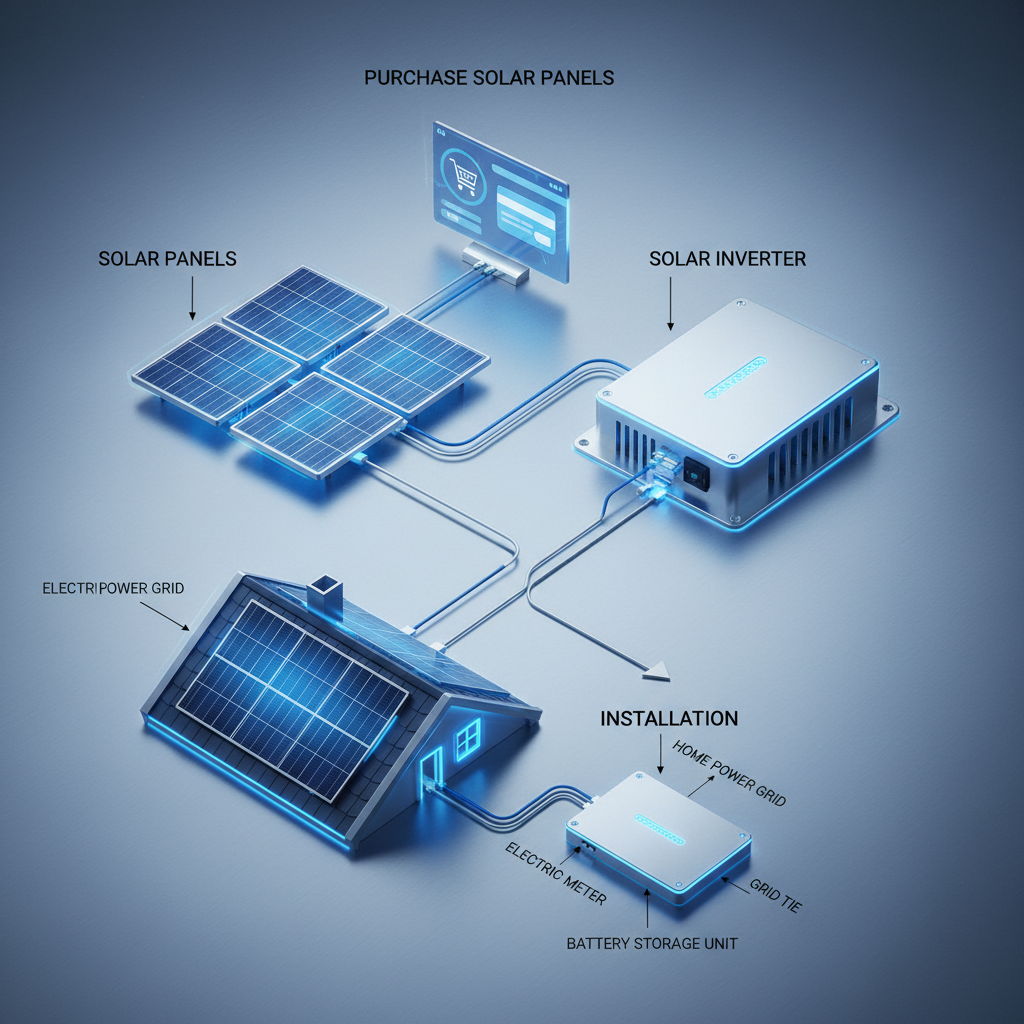
When budgeting for a photovoltaic system, the most critical metric for comparing hardware efficiency and cost is the solar panel price per watt. Rather than looking at the total cost of a panel, this standardized unit allows developers and homeowners to evaluate the actual economic value of the energy generation capacity they are purchasing.
The global market has shifted from simply seeking the lowest initial price to prioritizing the Levelized Cost of Energy (LCOE). This means the focus is now on how the cost per watt correlates with long-term energy yield, degradation rates, and the quality of integrated components like inverters and mounting systems.
Understanding the variables that fluctuate this pricing—from silicon wafer availability to the choice between monocrystalline and bifacial technologies—is essential for maximizing return on investment. This analysis explores the technical and market drivers that define modern solar pricing structures.

The Logic of Per-Watt Pricing

The calculation of the solar panel price per watt is a simple division: total panel cost divided by the rated wattage. However, this figure is rarely static. It is influenced by the scale of procurement, the shipping logistics from manufacturing hubs in Hebei or elsewhere, and the specific certifications required for local grid compliance.
For distribution markets, this metric is the primary tool for benchmarking. A lower price per watt might suggest a more economical solution, but professional buyers must investigate whether this is achieved through manufacturing efficiency or by compromising on the longevity of the materials and the warranty period.
Technical Drivers of Cost Variance
One of the most significant drivers of cost variance is the transition from regular solar panels to Bifacial Solar Panels. Bifacial technology allows for energy capture on both the front and rear sides, which can increase total energy yield by 10-30% depending on the albedo of the surface. While the upfront price per watt may be higher, the actual cost per kilowatt-hour generated over the system's life is often lower.
The integration of power electronics also plays a role. The choice between a central solar inverter and a Micro Solar Inverter changes the system's financial profile. Micro inverters, while increasing the initial cost per watt of the total installation, maximize power station capacity by allowing components to generate power independently, preventing a single shaded cell from reducing the output of the entire string.
Furthermore, certifications such as ISO 9001, CE, and TUV SUD Mark act as quality floors. Products that adhere to these rigorous international standards may carry a slight premium in price per watt, but they mitigate the risk of premature failure and ensure compatibility with international energy storage batteries and on-grid systems.
Balancing Efficiency and Capital Expenditure
When evaluating hardware, the tension between initial capital expenditure (CAPEX) and operational efficiency is constant. High-efficiency modules reduce the amount of roof or land area required to meet a specific energy target, thereby lowering the costs of mounting hardware and labor.
The true economic value of a solar installation is not found in the lowest price per watt at the point of purchase, but in the highest energy generation performance relative to the total lifecycle cost.
This perspective shifts the focus toward warranties. A 5-year warranty for materials and processing, combined with intelligent monitoring for fast shutdown and real-time optimization, ensures that the initial investment is protected against technical degradation and unexpected system failures.
Market Scaling and Price Indices
Price fluctuations in the solar industry typically follow a pattern of technological maturity. As production methods for high-efficiency cells become standardized, the price per watt decreases. However, the introduction of "hot products" with new features, such as improved temperature coefficients or higher bifaciality, often creates temporary price plateaus before scaling.
To visualize this, we can look at a relative value index. This index compares the cost-to-performance ratio of different module types, where a lower index indicates a better balance between the purchase price and the energy yield potential.
Figure 2. Relative Value Index by Technology Type
Application Scenarios and Value Optimization
The ideal price per watt varies by application. For residential home roofs, the priority is often high power density to maximize limited space, making high-efficiency regular panels the logical choice. In contrast, commercial buildings with vast roof areas can leverage larger scale procurement of bifacial panels and on-grid solar inverters to drive down the cost per watt through economies of scale.
In specialized sectors, the cost metric changes. For agricultural irrigation in remote areas, the reliability of the off-grid solar inverter and the robustness of the panels are more critical than the raw price per watt. Similarly, in marine and aviation applications, weight-to-power ratios supersede simple cost metrics, requiring customized energy solutions that focus on maximizing power station capacity in constrained environments.
Evolution of PV Hardware Costs
Historically, the solar industry was driven by a race to the bottom regarding the price per watt. However, we are seeing a professionalization of the supply chain. Companies like Hebei BenJiu New Energy Technology Co., LTD. are focusing on integrated energy solutions rather than just selling components. This includes providing comprehensive systems that pair panels with matched inverters and energy storage batteries.
This systemic approach reduces the hidden costs associated with mismatching components. For instance, using a micro solar inverter can prevent the "Christmas light effect," where one underperforming panel drags down the entire string's output. The efficiency gain here effectively lowers the real-world price per watt by increasing the total kWh harvested.
Looking forward, the integration of intelligent monitoring and fast shutdown capabilities is becoming a standard requirement. These features add slight cost but are essential for safety and maintenance, particularly in industrial and commercial distribution markets.
Hardware Selection Decision Framework
Selecting the right hardware requires a weighted analysis of multiple factors. A buyer should not choose based on the lowest price per watt alone but should evaluate the module's efficiency, the manufacturer's certifications, and the suitability for the specific environment.
For instance, a project in a high-albedo environment (such as a sandy region or a white roof) would find Bifacial Solar Panels far more economical over time than regular panels, even if the initial price per watt is 15% higher.
The following framework helps in comparing different hardware configurations based on typical operational requirements and their relative suitability for different installation scenarios.
| Selection Factor | Standard Mono | Bifacial Module | Custom Energy Sol. |
|---|---|---|---|
| Initial Price/Watt | Low | Moderate | High |
| Energy Yield Pot. | Standard | Very High | Optimized |
| Installation Area | Moderate | Moderate | Flexible |
| Ideal Scenario | Residential Roof | Ground Mount | Marine/Aviation |
| LCOE Impact | Baseline | Low (Efficient) | Low (Targeted) |
| Maintenance Need | Standard | Moderate | Specialized |
Questions & Answers
The calculation is performed by taking the total cost of a single solar panel and dividing it by its rated power output in watts. For example, if a 400W panel costs $160, the price per watt is $0.40. This metric allows buyers to compare panels of different sizes and power ratings on a level playing field, though it does not account for the cost of inverters, racking, or installation labor.
Not necessarily. A very low price per watt may indicate lower-grade silicon, a shorter warranty, or a lack of critical certifications like IEC 61215 or CE. In the long run, a slightly more expensive panel with higher efficiency and a better warranty (such as 5 years for materials) often provides a better return on investment by generating more electricity and requiring fewer replacements over 25 years.
Bifacial panels typically have a higher initial price per watt than monofacial panels. However, they capture sunlight from both sides, increasing the total energy harvested. When you calculate the "effective" price per watt based on actual energy production (kWh), bifacial panels are often more cost-effective, especially in ground-mounted arrays or roofs with reflective surfaces.
Integrating micro solar inverters increases the initial cost per watt compared to using a single string inverter. However, micro inverters optimize each panel independently. This prevents one shaded or dirty panel from dropping the output of the entire string, thereby maximizing the power station capacity and potentially shortening the payback period of the entire investment.
To ensure you are paying for quality, look for ISO 9001 (quality management), IEC 61215 and 61730 (design and safety), and regional marks like CE, UL, or TUV SUD. These certifications guarantee that the panels have undergone rigorous stress tests for weather resistance and electrical safety, justifying the investment over uncertified, cheaper alternatives.
Government subsidies, tax credits, and clean energy mandates can artificially lower the effective price per watt for the end-user. Furthermore, policies supporting the development of the clean energy industry often lead to increased manufacturing capacity and technological breakthroughs, which naturally drive down the wholesale price of photovoltaic equipment globally.
Final Thoughts
Evaluating a solar installation through the lens of the solar panel price per watt is a necessary starting point, but it should not be the final decision factor. The shift toward high-efficiency Bifacial Solar Panels and intelligent power management systems indicates that the industry is moving from a "lowest cost" model to a "highest value" model.
By balancing initial hardware costs with long-term energy yield, rigorous certifications, and comprehensive warranties, users can ensure their transition to green energy is both environmentally sustainable and financially viable.