High-Efficiency Tie Grid Inverter for Seamless Solar Power
Understanding the Grid-Tied Inverter Technology
The backbone of modern renewable energy systems, the tie grid inverter plays a pivotal role in converting direct current (DC) generated by solar panels or other DC sources into alternating current (AC) suitable for injection into the utility grid. These sophisticated devices ensure seamless integration of distributed generation with national power infrastructures, enabling consumers and businesses to reduce their carbon footprint and achieve energy independence. As the world transitions towards sustainable energy, the efficiency, reliability, and intelligence of grid-tied inverters become paramount for economic viability and grid stability. This article delves into the intricate details of this critical technology, covering its technical prowess, market trends, and practical applications.
Related technologies, such as the micro tie grid inverter, offer decentralized optimization for smaller installations, while the broader category of on grid solar inverter systems encompasses a wide array of solutions tailored for various scales, from residential rooftops to utility-scale solar farms.
Industry Trends and Market Dynamics
The global market for grid-tied inverters is experiencing robust growth, driven by supportive government policies, decreasing renewable energy costs, and increasing energy demand. Industry reports project a Compound Annual Growth Rate (CAGR) of over 10% for grid-tied inverters from 2023 to 2030, with significant innovations focusing on enhanced efficiency, smart grid integration, and cybersecurity. Key trends include the rise of hybrid inverters that combine grid-tied functionality with battery storage, advanced Maximum Power Point Tracking (MPPT) algorithms for optimized energy harvesting, and sophisticated communication protocols for remote monitoring and control.
There is a strong push towards higher power density in tie grid inverter units, reducing the physical footprint and installation complexity. Furthermore, the integration of artificial intelligence (AI) and machine learning (ML) for predictive maintenance and optimized energy dispatch is gaining traction, promising even greater reliability and cost-effectiveness. The demand for inverters with advanced grid support features, such as reactive power compensation and low-voltage ride-through (LVRT) capabilities, is also escalating as grids become more saturated with renewable energy sources.
Technical Specifications and Operating Principles
A tie grid inverter operates on fundamental power electronics principles to achieve its core function: DC-to-AC conversion and synchronization with the utility grid. Key components include the DC-DC converter (for MPPT and voltage stepping), the DC-AC inverter stage (typically a H-bridge or multi-level topology), and the control unit. The control unit is a sophisticated microprocessor-based system that manages the MPPT algorithm, synchronizes the output AC waveform with the grid's voltage and frequency, and implements protection features.
Key Technical Parameters:
- Maximum Power Point Tracking (MPPT) Efficiency: Typically >99%, ensuring maximum energy harvest from solar panels under varying irradiance and temperature conditions.
- Conversion Efficiency: Peak efficiencies often exceed 98.5%, with weighted European Efficiency (Euro Eff.) or CEC efficiency providing a more realistic average under typical operating conditions.
- Input Voltage Range: Critical for system design, accommodating various string configurations.
- Output Power Rating: Specifies the maximum AC power the inverter can deliver to the grid.
- Total Harmonic Distortion (THD): A measure of output waveform purity, typically less than 3% to comply with grid codes.
- Grid Standards Compliance: Adherence to IEEE 1547, UL 1741, VDE-AR-N 4105, G98/G99, etc., is mandatory for grid interconnection.
- Protection Features: Over-voltage, under-voltage, over-current, islanding protection, anti-islanding, ground fault protection.
Operating Principles:
The inverter continuously monitors the DC input from the PV array to operate it at its maximum power point, irrespective of weather conditions. This is achieved through advanced MPPT algorithms. Simultaneously, the inverter's control system precisely measures the grid voltage and frequency. Using Pulse Width Modulation (PWM) techniques, it generates an AC waveform that perfectly matches the grid's phase, frequency, and voltage, allowing for smooth power injection. Crucially, the inverter must also detect grid anomalies, such as power outages, and immediately disconnect to prevent 'islanding'—a condition where the inverter continues to power a section of the grid that has been separated from the main utility supply, posing a safety hazard.
The Manufacturing Process of a Tie Grid Inverter
The production of a high-quality tie grid inverter is a meticulously engineered process, emphasizing precision, material quality, and rigorous testing to ensure long-term reliability and performance.
Process Flow:
- Material Sourcing & Quality Control:
- Component Procurement: High-grade silicon carbide (SiC) or gallium nitride (GaN) power semiconductors, electrolytic capacitors, inductors (often custom-wound), microcontrollers, and communication modules are sourced from certified suppliers. Emphasis on long-lifetime components.
- Enclosure Materials: High-strength, corrosion-resistant aluminum alloys or galvanized steel for outdoor units, often powder-coated for enhanced durability against UV and environmental factors.
- Testing Standards: All incoming materials undergo stringent quality checks adhering to ISO 9001 standards, verifying specifications against purchase orders.
- PCB Fabrication & Assembly (PCBA):
- Automated SMT (Surface Mount Technology): High-speed pick-and-place machines accurately populate PCBs with power modules, control ICs, and other discrete components.
- Reflow Soldering: Components are securely bonded to the PCB.
- Wave Soldering/Selective Soldering: For through-hole components like bulky capacitors and connectors.
- Automated Optical Inspection (AOI) & In-Circuit Testing (ICT): To detect manufacturing defects and verify circuit functionality.
- Mechanical Assembly:
- Heat Sink Integration: Critical for thermal management. Often involves CNC machined aluminum heatsinks, precisely fitted and sealed.
- Enclosure Integration: PCBs, transformers, and other sub-assemblies are mounted into the robust enclosure.
- Wiring & Connection: Internal wiring harnesses are installed, ensuring secure and insulated connections.
- Sealing: Gaskets and sealants are applied to achieve specified ingress protection (IP) ratings (e.g., IP65, IP66), crucial for outdoor installations.
- Functional Testing & Calibration:
- Pre-calibration: Initial parameter settings are loaded.
- Burn-in Test: Inverters operate under load for an extended period (e.g., 24-72 hours) at elevated temperatures to identify early failures (infant mortality).
- Full Load Performance Testing: Verification of efficiency, THD, MPPT accuracy, grid synchronization, and protective functions under various input/output conditions. Adherence to ANSI C63.4 for EMC testing.
- Safety Testing: Dielectric strength (Hi-Pot), insulation resistance, ground bond tests.
- Final Inspection & Packaging:
- Visual inspection for cosmetic defects, proper labeling, and documentation.
- Packaging designed to protect the unit during transit.
Service Life & Target Industries:
A well-manufactured tie grid inverter is designed for a service life of 15-25 years, often supported by comprehensive warranties. These inverters are indispensable across diverse industries:
- Renewable Energy Sector: Solar power plants (utility-scale, commercial, residential), wind farms (for specific DC-coupled configurations).
- Industrial Facilities: Manufacturing plants, data centers leveraging solar for self-consumption and grid resilience. (Energy saving: Reduces operational costs, provides stable power).
- Commercial Buildings: Offices, retail complexes, hospitals aiming for LEED certification and lower energy bills.
- Infrastructure Projects: Public buildings, water treatment plants (Water supply & drainage: Powers pumps and purification systems, offering energy efficiency and reduced dependency on grid power).
- Agriculture: Remote irrigation systems, agricultural processing units.
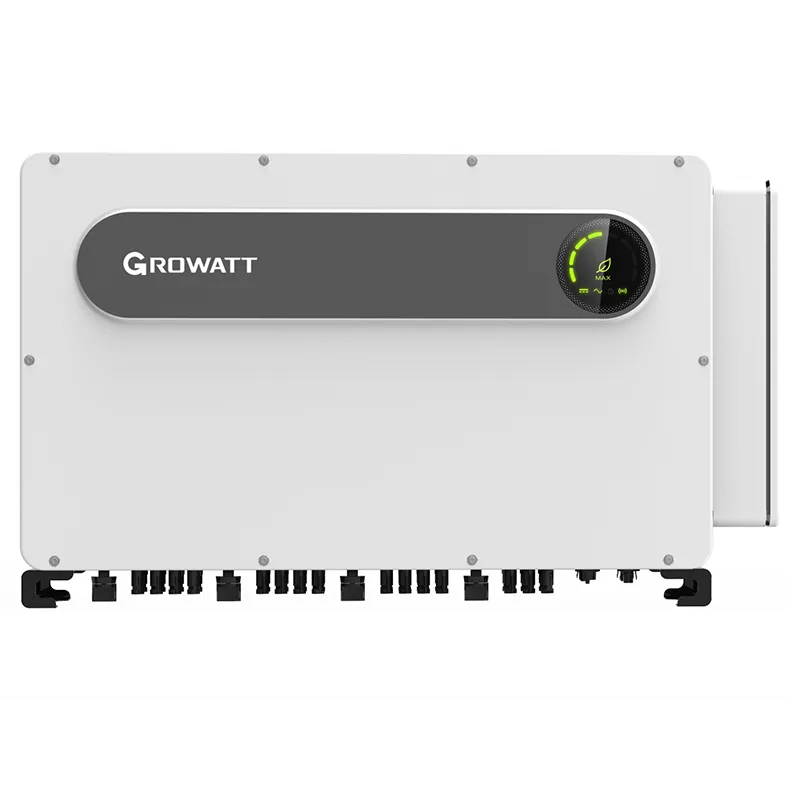
Growatt 185KW Safe High Efficiency High Yield Solar Inverter: Product Spotlight
The Growatt 185KW Safe High Efficiency High Yield Solar Inverter exemplifies cutting-edge technology in the realm of large-scale commercial and industrial solar installations. Engineered for maximum power output and reliability, this tie grid inverter offers robust performance even in demanding environmental conditions. Its design prioritizes safety, operational efficiency, and long-term yield, making it an ideal choice for significant energy projects.
Key Features and Benefits:
- High Efficiency: Maximizes energy harvest with industry-leading conversion rates.
- Robust Safety Features: Comprehensive protection against electrical faults, ensuring system integrity and personnel safety.
- Intelligent Monitoring: Advanced communication interfaces for real-time performance tracking and remote diagnostics.
- Durable Design: Built to withstand harsh environmental conditions, providing a long operational lifespan.
- Flexible Application: Suitable for a wide range of commercial and industrial grid-tied solar projects.
Growatt 185KW Inverter Product Specifications:
| Parameter | Specification |
|---|---|
| Max. DC Power | 277.5 kW |
| Max. AC Power | 185 kW |
| MPPT Voltage Range | 500 V - 1500 V |
| Number of MPPTs | 9 |
| Max. Efficiency | 98.8% |
| European Efficiency | 98.5% |
| Nominal AC Voltage | 400 V / 480 V (3-phase) |
| Dimensions (W/H/D) | 1050 / 680 / 365 mm |
| Weight | 128 kg |
| Ingress Protection | IP66 |
| Operating Temperature Range | -30°C to +60°C |
Key Technical Advantages and Application Scenarios
The advanced capabilities of modern tie grid inverter systems offer significant advantages that drive their widespread adoption across various scales and sectors. These benefits directly translate into enhanced project viability and energy security for B2B stakeholders.
Technical Advantages:
- High Conversion Efficiency: Minimizes energy losses during DC-to-AC conversion, maximizing the usable energy generated by solar panels. This directly impacts the project's return on investment (ROI).
- Advanced MPPT: Multiple MPPT trackers (as seen in the Growatt 185KW with 9 MPPTs) optimize power generation from different solar array orientations or strings affected by varying shading and temperature.
- Grid Support Functions: Modern inverters provide essential grid services such as reactive power control, frequency support, and low voltage ride-through (LVRT), enhancing grid stability and reliability. This is crucial for large-scale integration of renewables.
- Enhanced Safety and Reliability: Features like arc fault detection (AFD), rapid shutdown, ground fault circuit interrupter (GFCI), and robust over-current/over-voltage protection safeguard personnel and equipment.
- Data Monitoring & Diagnostics: Integrated communication interfaces (e.g., RS485, Ethernet, Wi-Fi) allow for remote monitoring, performance analysis, and fault diagnosis, reducing operational and maintenance costs.
- Durability and Environmental Resilience: With IP65/IP66 ratings, these inverters are built to withstand harsh weather conditions, including extreme temperatures, dust, and moisture, ensuring long operational life in challenging outdoor environments.
Typical Application Scenarios:
- Utility-Scale Solar Farms: Large-scale installations requiring high power output, multiple MPPTs, and robust grid interaction capabilities. (Energy saving: Massive power generation contributes to grid stability and national energy independence).
- Commercial & Industrial Rooftops: Businesses seeking to offset electricity costs, reduce peak demand charges, and demonstrate corporate social responsibility. (Energy saving: Significant reduction in electricity bills, improved energy resilience).
- Agricultural Sector: Powering irrigation pumps, cold storage facilities, and processing units in remote areas, reducing reliance on expensive diesel generators. (Corrosion resistance: Inverters are designed to operate in environments with agricultural chemicals and moisture, ensuring longevity).
- Educational Institutions & Healthcare Facilities: Providing reliable and sustainable power to critical infrastructure, often with backup battery integration for enhanced resilience.
- Metallurgy & Petrochemical Industries: While not directly applied within core processes, solar energy and grid-tied inverters can power auxiliary systems, administrative buildings, or contribute to general site electricity demand. (Corrosion resistance: Inverters used in these heavy industries require high IP ratings and robust enclosures to resist corrosive atmospheres, contributing to enhanced system reliability and safety).
Vendor Comparison and Customized Solutions
Selecting the right tie grid inverter vendor involves a comprehensive evaluation of product performance, reliability, support, and cost-effectiveness. While specific brand comparisons require detailed project parameters, general factors can guide decision-making for B2B clients.
Key Comparison Factors for Grid-Tied Inverters:
| Feature/Criteria | High-Tier Vendor (e.g., Growatt) | Mid-Tier Vendor |
|---|---|---|
| Conversion Efficiency | Typically >98.5% peak, >98% Euro Eff. | Generally 97-98% peak, 96-97% Euro Eff. |
| MPPT Trackers | Multiple (e.g., 9+ for 100kW+ inverters) | Fewer (e.g., 2-4 for 100kW+ inverters) |
| Grid Compliance | Full international and regional standards (UL, IEC, VDE, G99, IEEE 1547) | Basic compliance, may lack advanced grid support features |
| Monitoring & Communication | Integrated Wi-Fi/Ethernet, RS485, AI-driven diagnostics, cloud platform | Basic RS485, often requires external logger/gateway |
| Protection Features | Comprehensive (AFCI, GFCI, SPD Type II, LVRT, islanding) | Standard safety features, may lack advanced diagnostics |
| Warranty & Support | 10-year standard, extended options, global service network | 5-7 year standard, localized support varying by region |
Customized Solutions:
Beyond off-the-shelf products, many projects require tailored inverter solutions to meet specific site conditions, grid codes, or operational demands. This often involves:
- Voltage and Frequency Adaptation: Adjusting output parameters for non-standard grid requirements.
- Enhanced Environmental Protection: Custom enclosures for extreme climates (e.g., desert heat, arctic cold) or highly corrosive environments (e.g., coastal areas, industrial zones).
- Special Communication Protocols: Integration with existing SCADA systems or proprietary energy management platforms.
- Hybrid Functionality: Integration with specific battery storage systems or diesel generators for enhanced energy resilience.
- Certification for Specific Regions: Ensuring compliance with unique local electrical codes and utility interconnection requirements.
Companies with extensive R&D capabilities and flexible manufacturing processes are best positioned to offer such customized on grid solar inverter solutions, providing precise engineering that maximizes efficiency and minimizes risks for complex projects.
Real-World Application Case Studies
The practical success of tie grid inverter technology is best demonstrated through its application in diverse projects, showcasing its reliability, efficiency, and adaptability. These case studies highlight real-world experience and the tangible benefits delivered to clients.
Case Study 1: Large-Scale Commercial Rooftop Installation
A major logistics hub in the Midwest, spanning over 500,000 sq ft, sought to reduce its substantial electricity consumption and achieve energy cost stability. The solution involved deploying a 1.5 MW rooftop solar array utilizing multiple Growatt 185KW on grid solar inverter units.
- Challenge: High energy demand, varying solar irradiance due to partial shading from HVAC units.
- Solution: The 9 MPPTs per inverter ensured optimal energy harvesting from different sections of the array, mitigating losses from shading. The robust IP66 rating allowed for reliable outdoor operation in diverse weather conditions.
- Outcome: The system now generates approximately 70% of the facility's annual electricity needs, resulting in a projected annual saving of over $250,000. Real-time monitoring enabled by the inverters' integrated communication modules allows the facility managers to track performance and preemptively address any issues, ensuring continuous operation. Customer feedback highlighted the ease of installation and the intuitive monitoring interface as significant advantages.
Case Study 2: Industrial Complex in a Petrochemical Zone
An industrial client operating within a petrochemical zone required a solar solution to power its administrative and non-process critical facilities, aiming for both sustainability and reduced grid dependency. The environment presented challenges due to potential exposure to corrosive elements and airborne particulates.
- Challenge: Corrosive atmosphere and stringent safety protocols, requiring highly durable and reliable equipment.
- Solution: A custom-engineered solar solution was implemented, featuring micro tie grid inverter technology for module-level optimization alongside centralized string inverters with specialized corrosion-resistant coatings and enhanced sealing. The system was designed to comply with specific ATEX (Atmosphères Explosibles) zone requirements for certain components.
- Outcome: The project successfully integrated a 500 kW solar array, significantly reducing the site's carbon footprint and providing a stable power supply. The selected inverters, with their high IP ratings and protective features, have operated without incident, demonstrating exceptional durability in a challenging industrial environment. The client reported a 15% reduction in annual energy costs and improved energy independence.
Trustworthiness and Support: FAQ, Lead Time, Warranty, & After-Sales
Establishing trust with B2B clients requires transparent commitments regarding product quality, delivery, and ongoing support.
Frequently Asked Questions (FAQ) about Tie Grid Inverters:
-
Q: What is the lifespan of a modern tie grid inverter?
A: High-quality grid-tied inverters are designed for a service life of 15 to 25 years, though factors like environmental conditions and operating load can influence this. -
Q: Are grid-tied inverters safe during a power outage?
A: Yes, all certified grid-tied inverters feature anti-islanding protection, which automatically disconnects them from the grid during an outage to prevent backfeeding and ensure safety for utility workers. -
Q: How do on grid solar inverter systems handle varying weather conditions?
A: They utilize MPPT technology to continuously optimize power extraction from solar panels, adapting to changes in sunlight intensity and temperature to maintain peak performance.
Lead Time and Fulfillment:
Standard lead times for high-capacity inverters like the Growatt 185KW typically range from 4 to 8 weeks, depending on order volume and specific customization requirements. For urgent projects or bulk orders, expedited manufacturing and logistics options can be discussed with our sales team. Our global supply chain network ensures efficient and reliable delivery to project sites worldwide, adhering to agreed-upon schedules.
Warranty Commitments:
We stand behind the quality and performance of our products. The Growatt 185KW inverter comes with a standard 5-year product warranty, extendable to 10 or 15 years upon request, offering peace of mind for long-term investments. This warranty covers material defects and workmanship under normal use and service conditions. Comprehensive terms and conditions are provided with each purchase and are compliant with international standards such as ISO 9001.
Customer Support and After-Sales Service:
Our commitment extends beyond product delivery. We provide comprehensive after-sales support, including:
- Technical Hotlines: 24/7 access to experienced engineers for troubleshooting and technical inquiries.
- On-Site Support: Availability of field service engineers for complex installations or urgent repairs.
- Training Programs: Product training and certification for installation and maintenance teams.
- Spare Parts Availability: Readily available spare parts and modular designs for quick replacements, minimizing downtime.
- Software Updates: Regular firmware updates for performance enhancements and new feature integration.
Conclusion
The tie grid inverter stands as a critical component in the global shift towards renewable energy. Its evolving technology, marked by increasing efficiency, intelligent grid integration capabilities, and robust durability, positions it as an indispensable asset for commercial, industrial, and utility-scale solar projects. As the demand for sustainable energy solutions continues to soar, the continuous innovation in inverter technology, exemplified by products like the Growatt 185KW, will play a pivotal role in shaping a greener, more resilient energy future. Investing in high-quality, technically advanced grid-tied inverters ensures not only maximized energy yield but also long-term operational reliability and compliance with stringent global energy standards.
References
- International Energy Agency (IEA). "World Energy Outlook." www.iea.org
- Institute of Electrical and Electronics Engineers (IEEE). "IEEE Standard for Interconnecting Distributed Resources with Electric Power Systems (IEEE 1547)." standards.ieee.org
- National Renewable Energy Laboratory (NREL). "Solar Inverter Technologies." www.nrel.gov
- PV Magazine. "Global Solar Inverter Market Trends." www.pv-magazine.com
- Solar Energy Industries Association (SEIA). "Solar Industry Research Data." www.seia.org
-
Designing a Modern Home Roof Made Out of Solar Panels GuideNewsApr.16,2026
-
Guide to the Size of 150 Watt Solar Panel for Your ProjectNewsApr.09,2026
-
Understanding the Dimensions and Applications of a 200W Solar PanelNewsApr.07,2026
-
Understanding the Dimensions and Factors of a 330W Solar Panel SizeNewsApr.04,2026
-
Understanding the Size and Dimensions of a 4kW Solar Panel System for Your HomeNewsMar.31,2026
-
Comprehensive Guide to Sizing Your Solar System for Optimal Energy ProductionNewsMar.28,2026