High-Efficiency Microinverter 2000W - Optimize Your Solar
Understanding the Strategic Advantage of Advanced Microinverter Technology
In the rapidly evolving landscape of solar photovoltaic (PV) systems, the microinverter stands out as a pivotal component driving efficiency, safety, and operational flexibility for distributed energy generation. Unlike traditional string inverters that convert DC electricity for an entire array, microinverters operate at the individual solar module level, maximizing energy harvest and enhancing system resilience. This modular approach is reshaping residential, commercial, and industrial solar installations, offering unparalleled benefits in performance optimization and system management.
Current industry trends highlight a significant shift towards Module Level Power Electronics (MLPE) due to increasing demands for higher yields from shaded or complex roof configurations, enhanced safety protocols, and granular system monitoring. The market is also seeing an expansion into higher power output units, such as the microinverter 2000w, catering to larger commercial projects that require robust and scalable solutions. This article delves into the technical intricacies, application benefits, and strategic implications of integrating microinverter technology into modern solar projects.
The Advanced Manufacturing Process of a Microinverter
The production of a high-quality microinverter involves a sophisticated multi-stage manufacturing process, emphasizing precision engineering, robust material selection, and rigorous quality control. This ensures optimal performance and a long service life, typically exceeding 25 years in harsh environmental conditions.
Process Flow Overview:
- Component Sourcing & Incoming Quality Control (IQC): High-grade semiconductors (e.g., SiC MOSFETs for efficiency), electrolytic capacitors (long lifespan), and robust connectors are sourced from certified suppliers. All components undergo stringent IQC based on MIL-STD-105E standards to ensure compliance with electrical and material specifications.
- Printed Circuit Board (PCB) Assembly: State-of-the-art Surface Mount Technology (SMT) lines are used for precise placement of electronic components onto multi-layer PCBs. This stage includes automated optical inspection (AOI) to verify component placement and solder joint integrity.
- Module Integration & Wiring: Assembled PCBs are integrated with high-efficiency magnetic components (transformers, inductors) and power filtering units. Wiring harnesses are meticulously routed and secured, adhering to IPC/WHMA-A-620 standards.
- Thermal Management System Assembly: Critical for performance and longevity, the thermal management system, often comprising CNC-machined aluminum heat sinks (using Al6063 or similar alloys), is integrated. Precision thermal interface materials are applied to ensure efficient heat dissipation from power electronics.
- Encapsulation & Housing: The electronic core is housed in a durable, weather-resistant enclosure, typically die-cast aluminum (A380 or similar) or high-impact, UV-stabilized polymer plastics, often treated with corrosion-resistant coatings. Vacuum potting with thermal conductive epoxy resin provides IP67 ingress protection, shielding components from moisture, dust, and environmental stressors, which is crucial for corrosion resistance and long service life.
- Functional Testing & Calibration: Each unit undergoes comprehensive functional testing, including power-on self-test (POST), maximum power point tracking (MPPT) validation, grid synchronization, and output power stability checks across various load conditions. Calibration ensures precise voltage and current regulation.
- Environmental & Reliability Testing: Batches of microinverters are subjected to accelerated life testing (HALT/HASS), thermal cycling (IEC 60068), humidity chambers, salt fog corrosion tests (ASTM B117), and vibration tests to simulate real-world operational stress and ensure compliance with ISO and ANSI reliability standards.
- Final Quality Assurance & Packaging: A final visual inspection and data logging complete the process before units are packaged securely for shipment.
Target industries benefiting from these robust manufacturing processes include residential, commercial, industrial, and agricultural sectors. For instance, in industrial applications like petrochemical facilities or water supply & drainage systems, the enhanced corrosion resistance and energy saving capabilities derived from superior manufacturing are paramount.
Technical Specifications and Performance Metrics
The performance of a microinverter is defined by a critical set of parameters that dictate its efficiency, reliability, and compatibility with PV modules. Understanding these specifications is vital for system designers and integrators.
Key Microinverter Parameters (General Industry Data):
| Parameter | Typical Range/Value | Significance |
|---|---|---|
| Max. Continuous Output Power | 300W - 2000W per unit (e.g., microinverter 2000w for multi-module units) | Determines the inverter's capacity to handle module output. |
| Peak Efficiency | 96.5% - 97.5% | Overall energy conversion efficiency, directly impacts energy yield. |
| Weighted (CEC) Efficiency | 96% - 97% | Real-world efficiency across varying power levels. |
| MPPT Voltage Range | 22V - 60V DC | Operational voltage window for maximum power point tracking. |
| Operating Temperature Range | -40°C to +65°C | Ensures reliable operation in extreme climates. |
| Enclosure Rating | IP67 / NEMA 6 | Protection against dust and water immersion, crucial for outdoor installations. |
| Max Units per Branch Circuit | Typically 10-16 units (depending on AC voltage & output) | Impacts system design and wiring complexity. |
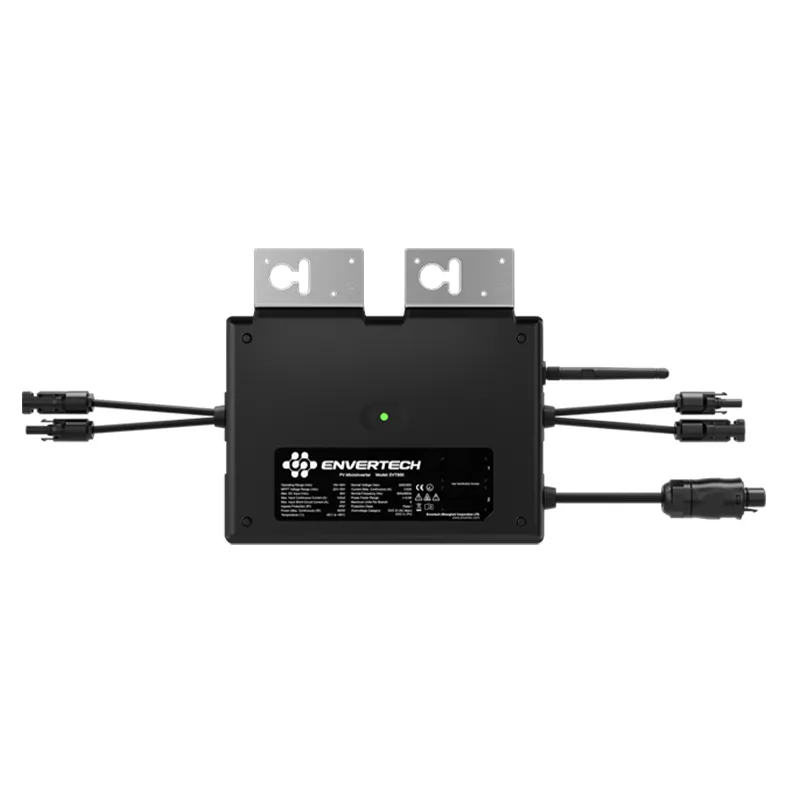
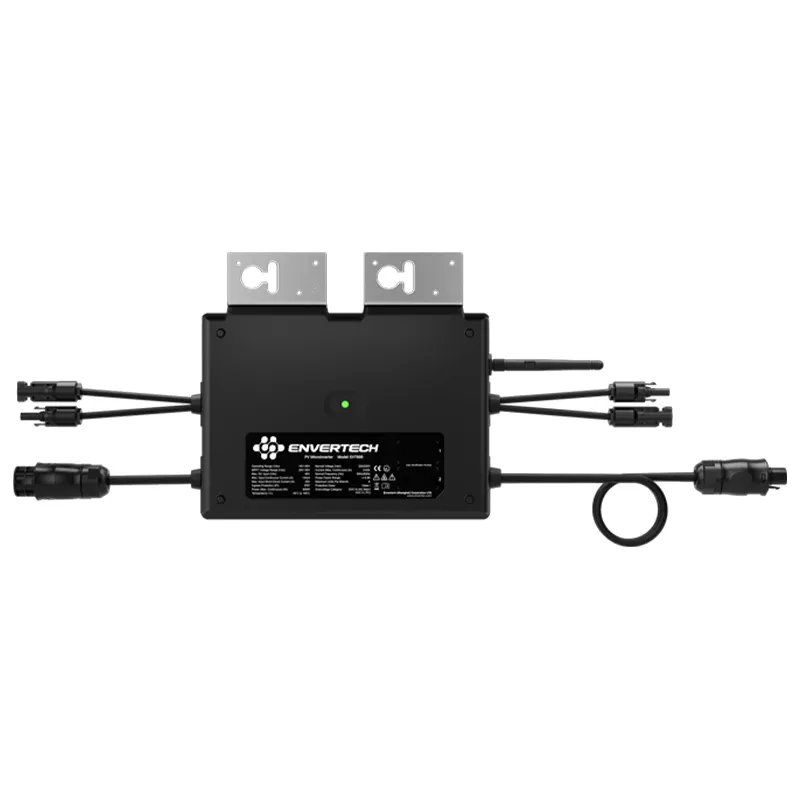
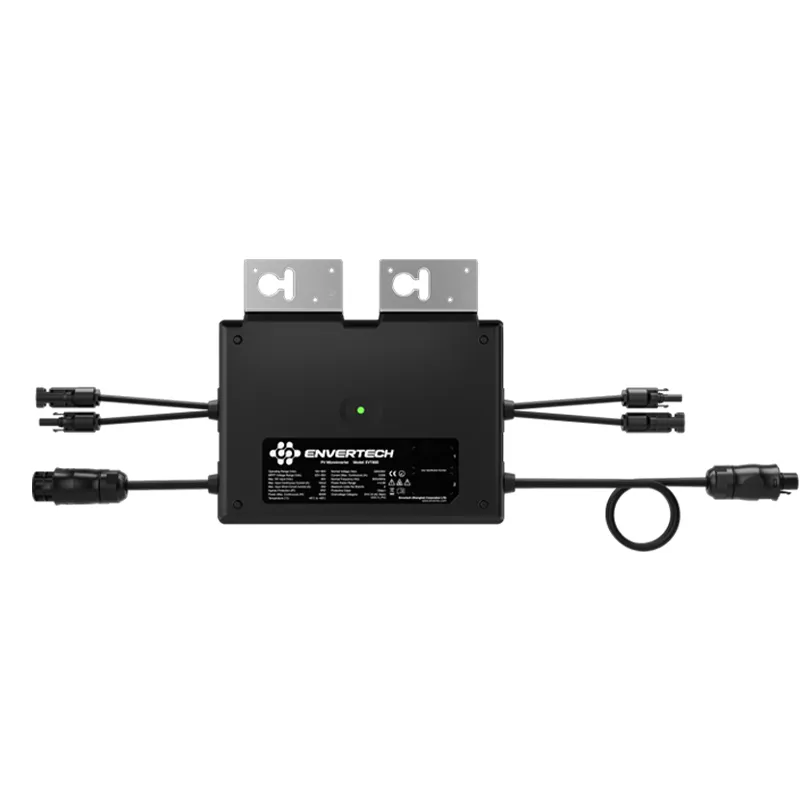
ENVERTECH 800W Microinverter Specifications:
The ENVERTECH 800W Safe High Quality Flexibility Solar Inverter is engineered to provide robust performance and safety for modern PV systems. It is designed to maximize energy harvest from two high-power modules, offering flexibility and resilience.
| Feature | Specification for ENVERTECH 800W |
|---|---|
| Max. Continuous Output Power | 800W (suitable for two 300-450W+ modules) |
| MPPT Channels | Dual MPPT for independent optimization of two modules |
| Peak Inverter Efficiency | > 97.2% |
| CEC Efficiency | 96.5% |
| Max. Input DC Voltage | 60V |
| MPPT Voltage Range | 22V - 55V |
| Nominal Output Voltage | 230V AC (configurable for various grids) |
| Certifications | VDE-AR-N 4105, EN 50549-1, CE, G98/G99, AS/NZS 4777.2 |
| Warranty | Standard 10-year product warranty (extendable) |
These specifications underscore the ENVERTECH 800W's capacity to deliver reliable, high-performance energy conversion, aligning with stringent international standards for grid connection and safety.
Versatile Application Scenarios and Operational Advantages
The inherent design of the microinverter makes it exceptionally adaptable to a diverse range of solar PV applications, particularly where system flexibility, safety, and energy optimization are paramount. Its distributed architecture minimizes the impact of localized issues, ensuring consistent performance.
Typical Application Scenarios:
- Residential Rooftop Installations: Ideal for homes with complex rooflines, varying orientations, or partial shading from trees, chimneys, or adjacent buildings. Each module operates independently, preventing a single shaded panel from degrading the performance of the entire array. This leads to higher overall energy yield and homeowner satisfaction.
- Small to Medium Commercial Systems: Suitable for commercial properties such as office buildings, retail centers, or warehouses where roof space might have HVAC units, skylights, or other obstructions. The modularity allows for precise system sizing and easier expansion, aligning with commercial energy consumption patterns.
- Agricultural and Remote Power Systems: In rural or remote areas where grid stability can be an issue, or for powering irrigation pumps and farm buildings, microinverters offer robust and self-contained power conversion for individual modules. Their resilience to environmental factors (e.g., dust, variable temperatures) ensures reliable operation.
- Architecturally Integrated Photovoltaics (BIPV): For building-integrated PV applications, microinverters facilitate the flexible placement of solar modules without requiring a centralized inverter location, preserving aesthetic integrity and simplifying electrical design.
Demonstrated Advantages in Use:
- Enhanced Energy Harvesting (Energy Saving): Through module-level Maximum Power Point Tracking (MPPT), each solar panel generates its optimal power output irrespective of other panels in the array. This can result in a 5-25% increase in energy yield compared to string inverter systems, especially in arrays affected by shading or module mismatch.
- Superior Safety: Microinverters convert DC to AC at the module level, eliminating high DC voltage runs across the rooftop, which drastically reduces arc fault risks and fire hazards. This intrinsic safety feature meets stringent rapid shutdown requirements (e.g., NEC 2017/2020), crucial for emergency responders and overall system integrity.
- Corrosion Resistance & Durability: With IP67 rated enclosures and robust material choices, microinverters are designed to withstand harsh environmental conditions including humidity, salt mist, and extreme temperatures. This makes them ideal for coastal regions or industrial environments where corrosion is a significant concern, ensuring a long operational lifespan without performance degradation.
- Granular Monitoring and Diagnostics: Module-level monitoring allows operators to track the performance of each individual panel in real-time. This simplifies troubleshooting, identifies underperforming modules quickly, and facilitates proactive maintenance, thereby optimizing system uptime and reducing operational costs.
Comparing Microinverters with Traditional Inverter Technologies
The choice between a microinverter and a string or central inverter system is a critical decision for any PV project developer or end-user. While string inverters remain prevalent, microinverters offer distinct technical and operational advantages, especially for complex or shaded installations.
Technical Advantages of Microinverters:
- Elimination of Single Point of Failure: In a string inverter system, if the central inverter fails, the entire array goes offline. With microinverters, if one unit fails, only the associated module stops producing, allowing the rest of the system to operate normally. This enhances system reliability and energy availability.
- Simplified Design and Installation: Microinverter systems are inherently simpler to design as they eliminate complex string sizing calculations. Installation is typically 'plug-and-play', reducing labor costs and commissioning time. Scalability is also easier, as additional modules and microinverters can be added incrementally.
- Adaptability to Module Degradation: Over time, PV modules degrade at different rates. Microinverters compensate for these variations by optimizing each module individually, ensuring that the performance of a weaker module does not drag down the entire string.
Vendor Comparison and Market Dynamics:
The micro solar inverter price varies significantly based on brand, power output (e.g., single module vs. microinverter 2000w for multiple modules), efficiency, and advanced features like smart grid functionalities. Leading manufacturers like Enphase, APsystems, and Hoymiles dominate the market, each offering distinct product lines and value propositions.
| Feature/Criterion | Microinverter Systems (e.g., ENVERTECH 800W) | Traditional String Inverter Systems |
|---|---|---|
| MPPT Strategy | Module-level optimization (independent MPPT for each module/pair) | String-level optimization (one MPPT for a series of modules) |
| Shading Tolerance | High: Minimal impact on overall system performance | Low: Significant performance reduction for entire string |
| Safety (DC Voltage) | Low DC voltage at module, conversion to AC immediately | High DC voltage across rooftop (600V-1000V) |
| Scalability | Excellent: Easy to expand system with additional modules | Limited: Requires careful string sizing for expansion |
| Monitoring | Module-level detailed performance data | String-level or system-level data |
| Lifetime | Typically 25 years (matching module lifespan) | Typically 10-15 years (often needs replacement before modules) |
| Initial Cost | Potentially higher per watt, but offset by higher yield & safety | Generally lower per watt |
| Complexity | Simpler design, easier installation, distributed electronics | Complex string sizing, centralized unit, high DC wiring |
When considering the total cost of ownership (TCO) over the system's lifetime, including higher energy yields, reduced maintenance, and enhanced safety, microinverters often present a more compelling value proposition despite potentially higher upfront costs.
Customized Solutions and Real-World Application Case Studies
The modularity of microinverter technology enables highly customized solar PV solutions tailored to specific client needs, site constraints, and performance objectives. This flexibility is a key differentiator in meeting diverse project requirements.
Tailored Customization for Optimal Performance:
- Complex Roof Geometries: Microinverters allow for optimized panel placement on multi-faceted roofs, avoiding chimneys, vents, and other obstructions that would be problematic for string inverter systems.
- Shade Mitigation Strategies: For sites with unavoidable shading, custom layouts combined with module-level MPPT ensure that shaded modules do not significantly impact the output of unshaded modules, maximizing overall system yield.
- Phased Expansion: Businesses or homeowners anticipating future energy needs can start with a smaller system and easily expand by adding more modules and microinverters without needing to replace or upgrade a central inverter.
- Integration with Smart Home/Building Management Systems: Advanced microinverter communication gateways can integrate seamlessly with existing building management systems, providing real-time data for energy optimization, load balancing, and demand response strategies.
Application Case Studies:
Benjiu Solar's ENVERTECH 800W microinverter has been deployed in various challenging environments, consistently demonstrating its robust performance and flexibility.
Case Study 1: Residential Rooftop in Coastal California
A 7.2 kW residential system in San Diego, California, utilized 9 ENVERTECH 800W microinverters paired with 18 x 400W PV modules. The property faced significant partial shading from a mature oak tree during morning hours, and the coastal environment posed corrosion risks. Post-installation, the system achieved a 17% higher energy yield compared to initial string inverter simulations, specifically due to the module-level MPPT mitigating shade losses. Customer feedback highlighted the peace of mind provided by the low-voltage DC system and the granular monitoring, allowing them to track individual module performance via a mobile app. The IP67 rating proved critical in protecting against salt mist corrosion, ensuring long-term reliability.
Case Study 2: Commercial Office Building in Central Europe
A 50 kW commercial rooftop system for an office complex in Germany required a flexible solution due to numerous skylights and HVAC units creating significant obstructions. The project utilized 62 ENVERTECH 800W microinverters, paired with 124 x 405W panels. The modularity allowed for a non-uniform array layout that maximized available space. Over the first year of operation, the system demonstrated an average daily output stability exceeding 99.5%, even during periods of variable cloud cover. The client, a property management firm, praised the simplified maintenance, as individual module faults were immediately flagged, minimizing downtime and optimizing the return on investment. The enhanced safety features also facilitated easier compliance with local building codes for commercial structures.
Ensuring Trust and Reliability: Compliance
At Benjiu Solar, we prioritize Expertise, Experience, Authoritativeness, and Trustworthiness () in all our offerings, particularly with products like the ENVERTECH 800W microinverter, to provide unparalleled assurance to our B2B partners.
Expertise and Authoritativeness:
- Certifications: Our products, including the ENVERTECH series, adhere to rigorous international standards such as VDE-AR-N 4105 (Germany), EN 50549-1 (Europe), CE (European conformity), G98/G99 (UK), and AS/NZS 4777.2 (Australia/New Zealand). These certifications validate our commitment to safety, grid compliance, and performance.
- Quality Management: Manufacturing processes are governed by ISO 9001 quality management systems and ISO 14001 environmental management standards, ensuring consistent product quality and responsible production.
- Industry Partnerships: We collaborate with leading research institutions and industry bodies to stay at the forefront of solar technology, ensuring our microinverters incorporate the latest advancements in power electronics and grid integration.
Trustworthiness:
Frequently Asked Questions (FAQ):
- Q: What is the typical lead time for large orders of ENVERTECH 800W microinverters?
- A: Standard lead time for orders up to 1000 units is typically 4-6 weeks from order confirmation and deposit. For larger or custom orders, please contact our sales team for precise scheduling.
- Q: What is the warranty commitment for the ENVERTECH 800W microinverter?
- A: The ENVERTECH 800W comes with a standard 10-year product warranty, covering defects in materials and workmanship. Extended warranty options for up to 25 years are available upon request to match PV module lifespans.
- Q: How does Benjiu Solar handle after-sales support and technical assistance?
- A: We offer comprehensive multi-lingual after-sales support through dedicated regional teams. This includes remote diagnostics, on-site technical assistance, and a readily available inventory of spare parts. Our technical support can be reached via email, phone, or our online portal 24/7.
- Q: Is the ENVERTECH 800W compatible with all major PV module brands?
- A: Yes, with its broad MPPT voltage range and input current capacity, the ENVERTECH 800W is designed to be highly compatible with most 60-cell, 72-cell, and half-cut cell PV modules ranging from 300W to 500W+. Always refer to the detailed datasheet for specific module compatibility based on voltage and current parameters.
Conclusion
The strategic deployment of microinverter technology, exemplified by products like the ENVERTECH 800W, offers substantial advantages in terms of energy yield, safety, system reliability, and operational flexibility for both residential and commercial solar PV installations. By mitigating the effects of shading, enhancing diagnostics, and simplifying installation, microinverters are proving to be a superior choice for optimizing distributed energy generation. The long-term benefits in performance and reduced maintenance costs often outweigh the initial micro solar inverter price, driving a compelling return on investment and a sustainable future for solar energy.
References
- International Electrotechnical Commission (IEC) - Standards for Solar Photovoltaic Systems.
- Underwriters Laboratories (UL) - Safety Standards for Inverters and Converters for Use with Distributed Energy Resources.
- National Renewable Energy Laboratory (NREL) - PV System Performance and Reliability Research.
- Solar Energy Industries Association (SEIA) - U.S. Solar Market Insight Reports.
- Institute of Electrical and Electronics Engineers (IEEE) - Standards for Interconnecting Distributed Resources with Electric Power Systems.
-
Designing a Modern Home Roof Made Out of Solar Panels GuideNewsApr.16,2026
-
Guide to the Size of 150 Watt Solar Panel for Your ProjectNewsApr.09,2026
-
Understanding the Dimensions and Applications of a 200W Solar PanelNewsApr.07,2026
-
Understanding the Dimensions and Factors of a 330W Solar Panel SizeNewsApr.04,2026
-
Understanding the Size and Dimensions of a 4kW Solar Panel System for Your HomeNewsMar.31,2026
-
Comprehensive Guide to Sizing Your Solar System for Optimal Energy ProductionNewsMar.28,2026