Exploring Solar Panel Theoretical Efficiency and Future Advancements
Understanding Solar Panel Theoretical Efficiency
The pursuit of sustainable energy solutions has led to significant advancements in solar panel technology. A crucial aspect of evaluating these advancements is understanding solar panel theoretical efficiency – the maximum possible efficiency a solar cell can achieve under ideal conditions. This article delves into the factors influencing this efficiency, explores different types of solar cells and their theoretical limits, and discusses ongoing research aimed at surpassing these boundaries. We'll explore the science behind maximizing sunlight conversion and how Benjiu Solar is contributing to a more efficient future.
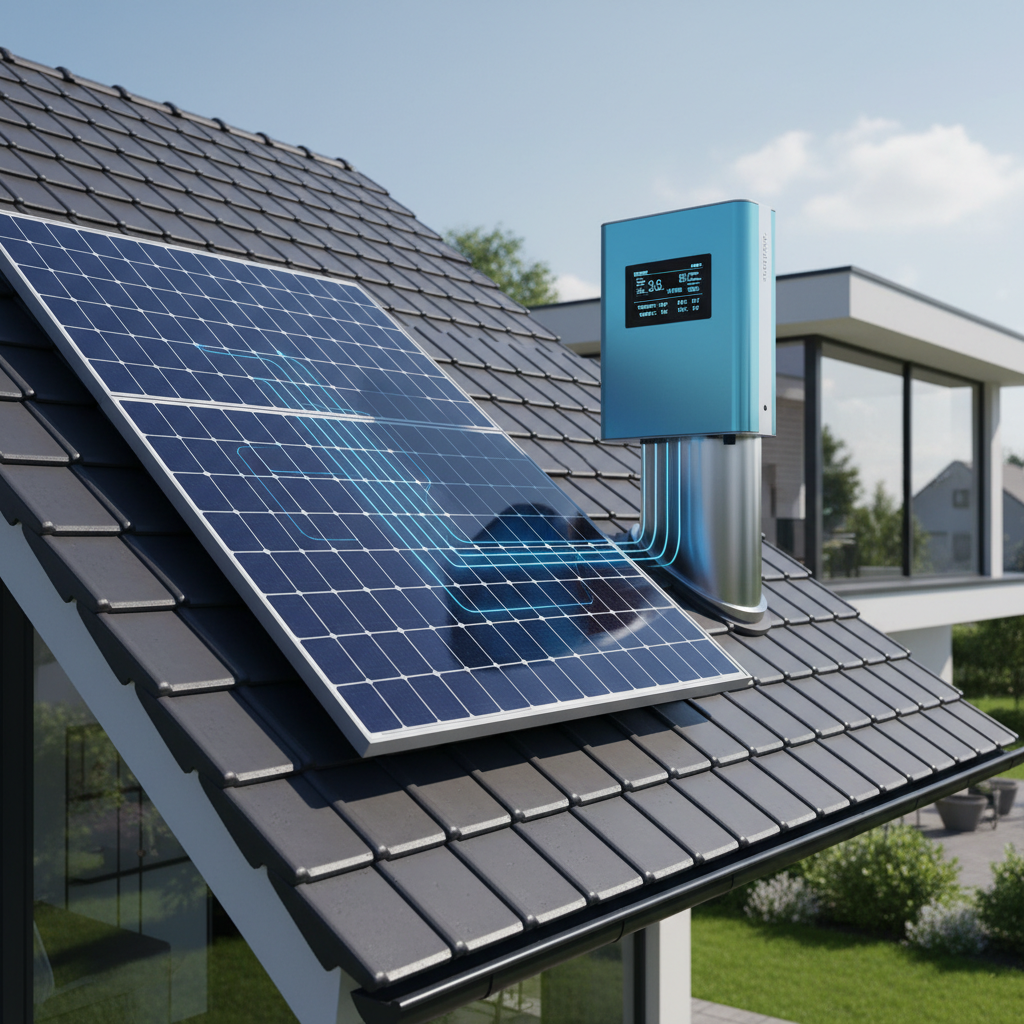
What Determines Solar Panel Theoretical Efficiency?
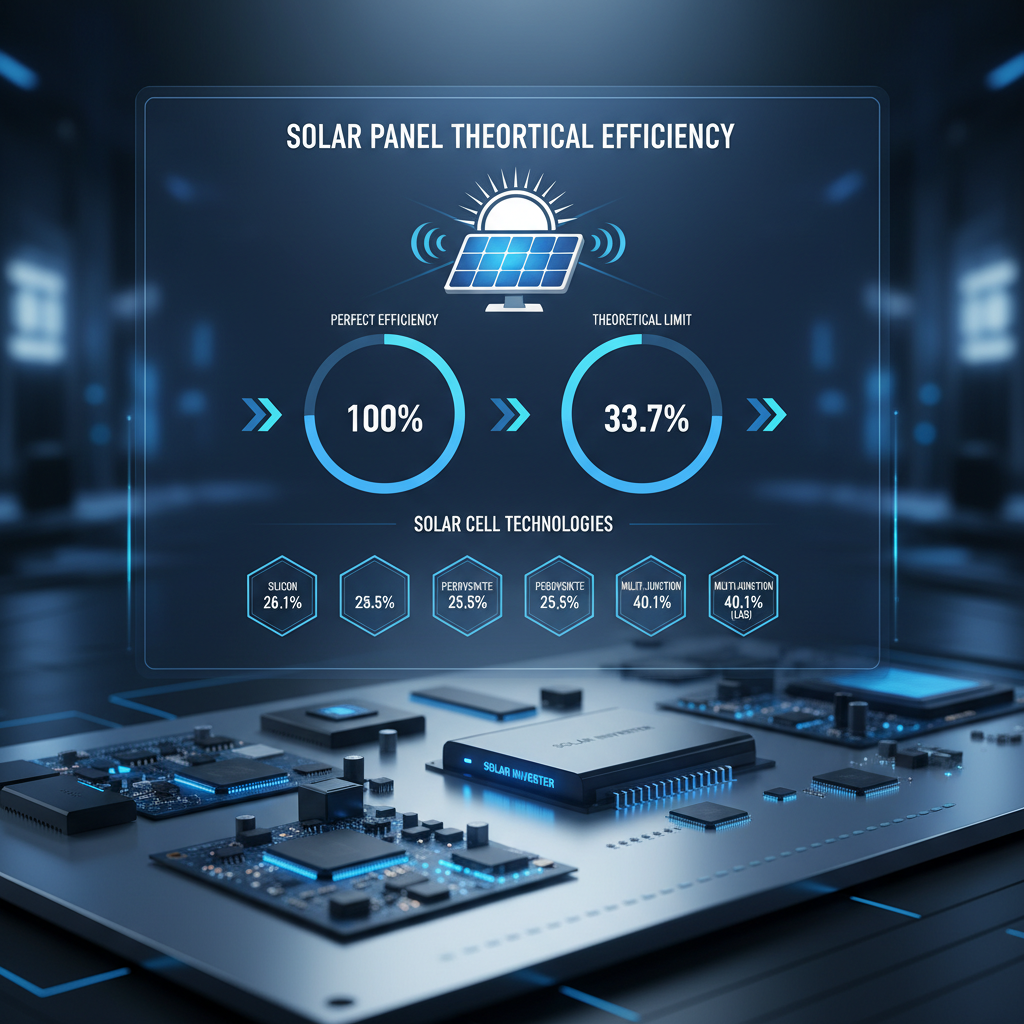
Theoretical efficiency isn’t simply about how much sunlight hits a panel; it's a complex calculation governed by fundamental physics. Several key factors come into play. First, the Shockley-Queisser Limit dictates a theoretical maximum efficiency of around 33.7% for a single-junction silicon solar cell. This limit arises from unavoidable energy losses within the cell. These losses include:
- Transmission Losses: Photons with energy below the silicon bandgap are not absorbed.
- Thermalization Losses: Photons with energy above the bandgap generate electron-hole pairs, but the excess energy is lost as heat.
- Recombination Losses: Electron-hole pairs recombine before contributing to the electrical current.
Furthermore, factors like the solar spectrum (the distribution of wavelengths in sunlight), temperature, and the quality of the semiconductor material all impact actual efficiency. Optimizing these factors is central to Benjiu Solar’s research and development efforts.
Key Takeaway: Understanding the Shockley-Queisser Limit is crucial for appreciating the challenges and opportunities in increasing solar panel efficiency. Minimizing energy losses is the primary goal.
Different Solar Cell Technologies and Their Efficiencies
Various solar cell technologies have emerged, each with unique characteristics and theoretical efficiency limits. While silicon remains the dominant material, other options are gaining traction. Here’s a comparison:
Advanced Technologies Pushing the Boundaries of Efficiency
Researchers are actively exploring technologies to break through the Shockley-Queisser Limit. These include:
- Multi-Junction Solar Cells: Stacking multiple layers of different semiconductor materials to absorb a wider range of wavelengths. These cells achieve efficiencies exceeding 47% in laboratory settings.
- Intermediate Band Solar Cells: Introducing an intermediate energy band within the semiconductor material to allow for the absorption of sub-bandgap photons.
- Perovskite Solar Cells: Offering high potential efficiencies and lower manufacturing costs, though stability remains a challenge. Benjiu Solar is investing in the development of stable perovskite technologies.
- Concentrated Photovoltaics (CPV): Using lenses or mirrors to focus sunlight onto small, high-efficiency solar cells.
The Importance of Efficiency in Real-World Applications
Higher solar panel efficiency translates directly to several benefits: reduced land usage, lower installation costs, and increased energy output. For residential applications, more efficient panels can fit onto smaller roof areas. For large-scale solar farms, maximizing efficiency minimizes the land footprint, preserving valuable ecosystems. Furthermore, higher efficiency means more electricity generated per dollar invested, making solar energy more competitive with traditional fossil fuels. Benjiu Solar is committed to delivering high-efficiency panels to maximize returns for our customers.
Looking Ahead: The Future of Solar Panel Efficiency
The quest for higher solar panel efficiency is an ongoing process. Continued research into advanced materials, innovative cell designs, and improved manufacturing processes will undoubtedly lead to further breakthroughs. While the Shockley-Queisser Limit remains a fundamental constraint, scientists are actively exploring ways to circumvent it and unlock the full potential of solar energy. The development of stable and efficient perovskite solar cells, combined with advancements in multi-junction technology, holds immense promise for a future powered by clean, renewable energy.
Conclusion
Understanding solar panel theoretical efficiency is vital for appreciating the advancements and future potential of solar energy. By continually pushing the boundaries of efficiency, we can unlock a cleaner, more sustainable energy future. Benjiu Solar is dedicated to driving innovation and providing high-performance solar solutions.
Frequently Asked Questions (FAQs)
What is the difference between theoretical efficiency and actual efficiency?
Theoretical efficiency represents the maximum possible efficiency under ideal conditions—perfect sunlight, optimal temperature, and flawless material quality. Actual efficiency, however, is always lower due to real-world limitations like shading, temperature fluctuations, dust accumulation, and imperfections in the manufacturing process. It also includes power losses in wiring and inverters. Therefore, commercial solar panels always have efficiencies lower than their theoretical limits.
How does temperature affect solar panel efficiency?
Solar panel efficiency generally decreases as temperature increases. This is because higher temperatures increase the rate of electron-hole recombination, reducing the voltage output of the cell. Most silicon solar panels experience a reduction in efficiency of around 0.3-0.5% per degree Celsius above 25°C. Proper ventilation and panel design can help mitigate this effect, and Benjiu Solar panels are engineered to perform optimally even in warmer climates.
What role does the solar spectrum play in panel efficiency?
The solar spectrum describes the distribution of wavelengths in sunlight. Different semiconductor materials absorb different wavelengths of light. Silicon, for example, doesn't efficiently absorb infrared or ultraviolet light. Multi-junction solar cells are designed to utilize a wider range of the spectrum by stacking layers of different materials, each optimized for a specific wavelength range. This leads to higher overall efficiency.
What is Benjiu Solar doing to improve solar panel efficiency?
Benjiu Solar is actively involved in research and development to enhance solar panel efficiency. This includes exploring advanced materials like perovskites, optimizing cell designs to minimize energy losses, and implementing innovative manufacturing techniques. We're also focused on improving panel durability and performance in real-world conditions through rigorous testing and quality control.
-
Designing a Modern Home Roof Made Out of Solar Panels GuideNewsApr.16,2026
-
Guide to the Size of 150 Watt Solar Panel for Your ProjectNewsApr.09,2026
-
Understanding the Dimensions and Applications of a 200W Solar PanelNewsApr.07,2026
-
Understanding the Dimensions and Factors of a 330W Solar Panel SizeNewsApr.04,2026
-
Understanding the Size and Dimensions of a 4kW Solar Panel System for Your HomeNewsMar.31,2026
-
Comprehensive Guide to Sizing Your Solar System for Optimal Energy ProductionNewsMar.28,2026