Off Grid Solar Inverter Enables Independence
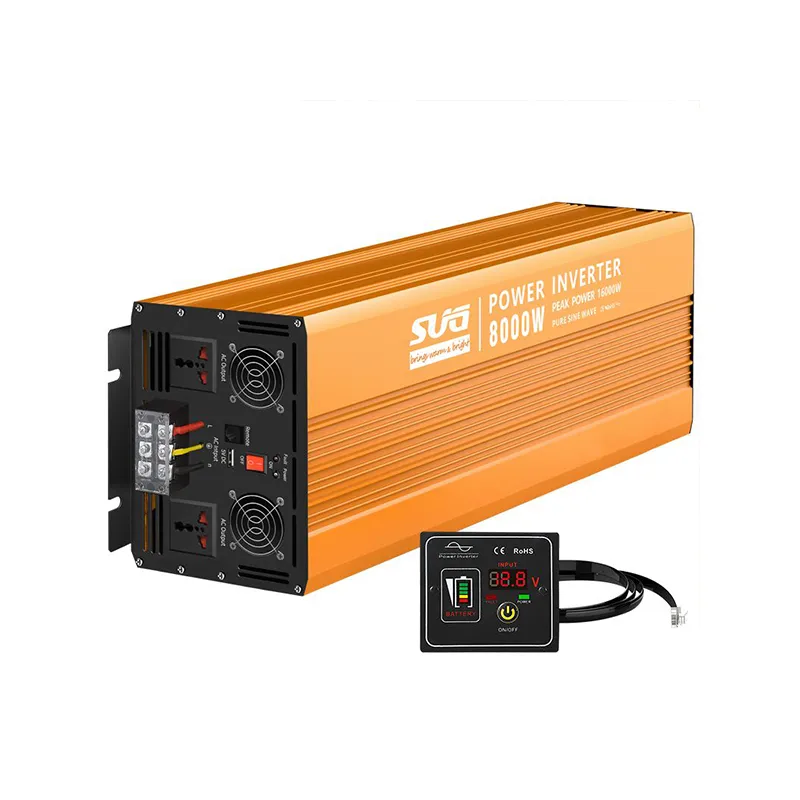
The global energy landscape is undergoing a profound transformation, driven by the empowering capabilities of off-grid solar inverter technology. This innovation is liberating communities, businesses, and critical infrastructure from the constraints and vulnerabilities of traditional grid dependency. Unlike grid-tied systems that fall silent during outages, off-grid solutions provide unwavering, uninterrupted power through sophisticated energy orchestration and advanced storage capabilities. Crucially, the off-grid solar inverter price has experienced a remarkable downward trajectory in recent years, propelled by economies of scale, manufacturing advancements, and intense market competition. This significant cost reduction has made high-performance hybrid inverter models accessible to a much wider audience, effectively democratizing reliable energy access for remote homesteads, vital agricultural operations, and disaster-resilient infrastructure. This revolution is underpinned by relentless breakthroughs in battery chemistry (particularly Lithium Iron Phosphate - LiFePO4), vastly improved Maximum Power Point Tracking (MPPT) efficiencies, and the flexibility of modular system design. For those seeking genuine energy sovereignty, inverter offgrid systems represent far more than hardware; they embody the fundamental right to self-sufficient, resilient, and sustainable power generation.
Technology Fundamentals: How off Grid Solar Inverter Systems Operate
Off grid solar inverter systems function through synchronized core processes that replace grid dependency with intelligent autonomy:
- DC-to-AC Conversion & Power Management
- Pure sine wave output ensures compatibility with sensitive medical and industrial equipment
- Dynamic load prioritization automatically manages non-critical circuits during low-generation periods
- Integrated transfer switches enable seamless, near-instantaneous transitions during generator integration
- MPPT Optimization
- Advanced MPPT controllers extract significantly more energy than basic alternatives, with sophisticated algorithms continuously adjusting voltage to capture marginal light conditions
- High efficiency is maintained even under challenging low-irradiation scenarios
- Battery Ecosystem Integration
- Compatibility with modern lithium batteries allows for much deeper discharge cycles compared to older technologies
- Temperature-compensated charging protocols substantially extend battery lifespan
Intelligent safeguards prevent damaging deep discharge during extended periods of limited solar generation
Liberation Applications: Where Inverter Offgrid Systems Shine
Off grid solar inverter deployments are transforming critical sectors worldwide:
- Remote Habitation
- Research stations in extreme climates achieve exceptional uptime without conventional fuel backup
- Remote agricultural operations report complete reliability for essential functions like water pumping
- Disaster Response
- Mobile medical facilities maintain full operation during grid collapses using robust systems
- Emergency communication hubs preserve vital satellite links through sophisticated generator integration
- Agricultural Revolution
- Agro-processing centers drastically reduce fuel costs by transitioning to solar-based power
Controlled-environment farms maintain critical climate systems through extended autonomy during weather disruptions
Financial Architecture: Understanding Off-Grid Solar Inverter Price vs Long-Term Value
The conversation around off-grid solar inverter price has fundamentally shifted. It's no longer merely a cost center but a strategic investment catalyst delivering compelling long-term value. While specific component prices fluctuate, the overarching trend is undeniable: a dramatic and sustained reduction in system costs driven by plummeting battery prices (especially LiFePO4), increased inverter efficiency and competition, and streamlined installation practices. Premium hybrid inverters and lithium batteries, once prohibitively expensive, are now within reach for a vast range of applications.
Key Drivers of Value & Accelerated ROI:
- Eliminated Fuel Costs:Replacing diesel generators translates into massive, immediate savings – often thousands of dollars annually – that are immune to volatile fuel prices. This is often the single largest financial benefit.
- Avoided Grid Extension Costs:For remote locations, the cost of extending utility lines can be astronomical ($15,000 - $50,000+ per mile). Off-grid solar provides power at a fraction of this upfront cost.
- Reduced Maintenance:Solar systems have minimal moving parts compared to generators, leading to significantly lower long-term maintenance expenses and less downtime.
- Enhanced Equipment Longevity:Premium off-grid inverters and LiFePO4 batteries boast exceptional lifespans (10+ years for inverters, 10-15+ years for batteries with thousands of cycles) with minimal degradation when properly sized and maintained. This ensures decades of low-cost operation after the payback period.
- Increased Productivity & Reliability:Uninterrupted power for businesses (farms, workshops, telecoms) prevents costly downtime and lost revenue. Reliable power improves quality of life and enables economic activities in remote areas.
- Environmental & Health Benefits:While harder to quantify directly, eliminating diesel emissions reduces air pollution, noise, and carbon footprint, contributing to healthier environments and climate goals.
ໄດ້ off-grid solar inverter price is the entry ticket to unlocking these substantial, ongoing financial benefits and achieving true energy cost predictability.
System Scaling: Matching Inverter Offgrid to Energy Needs
Off grid solar inverter sizing follows precise energy sovereignty principles through tiered implementation:
Tiered Independence Framework
- Essential Loads:Systems powering refrigeration, lighting, and communication needs
- Productive Use:Solutions supporting water pumping, workshop tools, and milling equipment with parallel inverter capability
- Full Autonomy:Comprehensive systems powering HVAC, electric cooking, and agro-processing, often featuring three-phase commercial inverters with generator integration
- Scalability Principle
- Systems exemplify true scalability—appropriately sized solar arrays and multiple inverters can power entire agricultural or commercial operations
FAQs About Off Grid Solar Inverter
What distinguishes premium off grid solar inverter MPPT technology?
Advanced MPPT controllers operate at industry-leading efficiency using sophisticated algorithms capable of capturing rapid irradiance fluctuations, extracting substantially more daily energy than basic controllers.
How does off grid solar inverter price compare long-term to diesel generators?
Over their operational lifespan, off grid solar inverter systems achieve significantly lower energy costs compared to diesel generators when considering comprehensive fuel and maintenance expenses. Substantial annual savings are realized.
Can inverter offgrid systems power industrial machinery?
Yes. Commercial three-phase models support high surge currents required for industrial motors. Advanced hybrid inverters can even utilize and store excess generator output when solar generation is insufficient.
What battery technology maximizes off grid solar inverter ROI?
Modern lithium batteries provide exceptionally high cycle life with deep discharge capability—delivering significantly more usable energy per investment dollar than traditional alternatives. Modular units allow flexible system expansion.
How long do off grid solar inverter installations last?
Premium units operate reliably for extended periods when properly specified. Systems operating within recommended load parameters routinely surpass significant operational hours without failure.
Stop waiting for grid connections that never come! ໄດ້ off grid solar inverter revolution delivers true energy sovereignty:
- Achieve substantially lower energy costs—significantly outperforming diesel
- Unlock continuous power with proven reliability in extreme environments
- Liberate significant funds previously spent on fuel
This independence is engineered reality: - Achieve compelling payback periods followed by years of low-cost power
- Deploy resilient systems that maintain operation during disasters
- Eliminate recurring utility bills permanently
-
Designing a Modern Home Roof Made Out of Solar Panels Guideຂ່າວApr.16,2026
-
Guide to the Size of 150 Watt Solar Panel for Your Projectຂ່າວApr.09,2026
-
Understanding the Dimensions and Applications of a 200W Solar Panelຂ່າວApr.07,2026
-
Understanding the Dimensions and Factors of a 330W Solar Panel Sizeຂ່າວApr.04,2026
-
Understanding the Size and Dimensions of a 4kW Solar Panel System for Your Homeຂ່າວMar.31,2026
-
Comprehensive Guide to Sizing Your Solar System for Optimal Energy Productionຂ່າວMar.28,2026