Tie Grid Inverter | High Efficiency, Safe, Smart Control
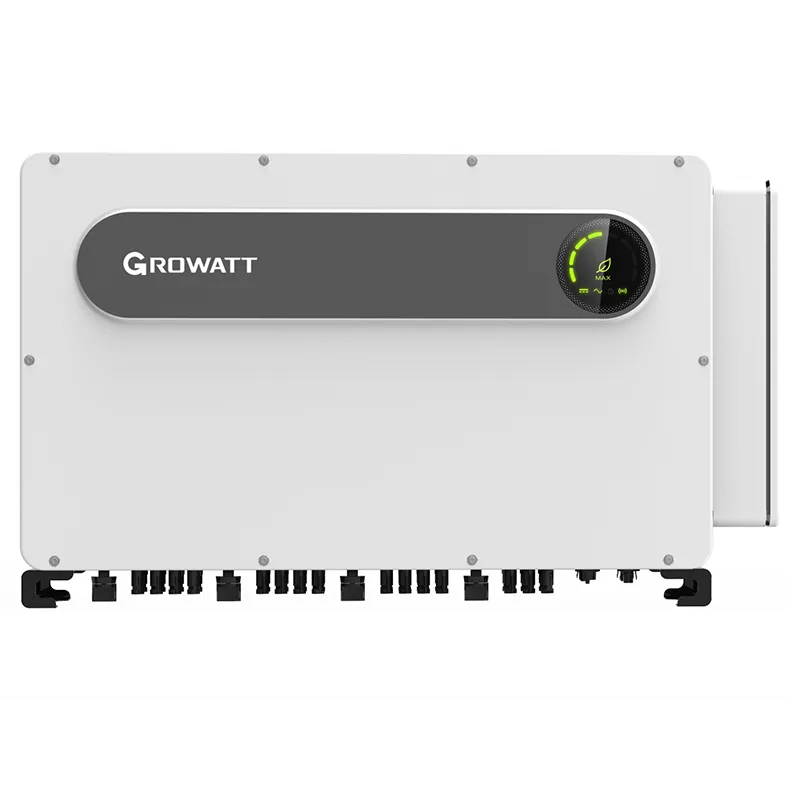
Grid Connection, Done Right: Growatt 185 kW and the New Era of tie grid inverter design
I’ve spent enough time on rooftops and in substations to know: the inverter is where solar projects either sing or struggle. The Growatt 185KW Safe High Efficiency High Yield Solar Inervter (yes, there’s a tiny spelling quirk in that model title) is part of a wave of smarter, safer, and more grid-friendly hardware. And, to be honest, it arrives just as utilities are tightening codes and asset owners are demanding higher uptime.
What’s driving the market now
Three trends stand out: higher power density per unit (fewer boxes, simpler BOS), compliance-by-default with evolving grid codes (IEEE 1547-2018, EN 50549), and embedded safety (AFCI, rapid shutdown hooks, stronger surge protection). Many customers say they’re also choosing vendors who can tune reactive power and provide real fleet data, not just glossy PDFs.
Product snapshot: Growatt 185 kW
| Rated AC Power | 185 kW (3Φ, 400 Vac) |
| Max Efficiency | up to ≈99.0% (real-world use may vary) |
| MPPT / Strings | ≈12 MPPT, ~24 strings |
| DC Input Range | 200–1000 Vdc; start ≈250 V |
| Safety | AFCI, Type II SPD (DC/AC), DC switch, anti-islanding |
| Protection Class | IP65/IP66 (outdoor capable) |
| Comms | RS485, Modbus RTU/TCP; optional Wi‑Fi/4G dongle |
Origin and supply chain note: units ship from 2B01, Guomao Building, Zhongshan Road, Qiaoxi District, Shijiazhuang City, Hebei Province, China. Lead times have been stable lately, which—surprisingly—hasn’t always been the case in this segment.
Materials, build methods, and testing
Chassis uses powder‑coated aluminum with high-surface-area heat sinks; power stage is typically IGBT-based with low-loss magnetics; boards are conformal-coated for coastal sites. Process flow: incoming IGBT/diode screening → SMT and selective solder → conformal coat cure → thermal cycling (−25°C to +60°C) → surge/hi‑pot → routine efficiency and THD checks. Testing standards referenced include IEC 62109-1/-2 (safety), IEC 62116 (anti‑islanding), and IEEE 1547/1547.1 grid interoperability. Service life is designed for ≈15–20 years with fan replacements around year 10, real-world use may vary.
Application scenarios
C&I rooftops (warehouses, logistics parks), carports, agrivoltaics, and small utility clusters. With adjustable PF and volt/VAR curves, a tie grid inverter like this can keep feeders stable during midday peaks. For microgrids that normally run grid‑connected, it plays nicely as the export/import governor via Modbus.
Quick field note (case study, condensed)
A 2.4 MW rooftop upgrade in Southeast Asia swapped legacy 60 kW units for 185 kW blocks. Post‑commissioning data over 90 days showed +1.6% specific yield vs. prior year (weather‑normalized), MPPT efficiency ~99.5%, and AC THD
Vendor comparison (indicative)
| Vendor / Model | Rated Power | Peak Eff. | MPPT Count | Notes |
|---|---|---|---|---|
| Growatt 185 kW | 185 kW | ≈99.0% | ≈12 | Strong price/performance; wide grid‑code support |
| Vendor B 175 kW | 175 kW | ≈98.6% | 8–10 | Compact; fewer strings per MPPT |
| Vendor C 200 kW | 200 kW | ≈98.8% | 10–12 | Heavier; premium pricing |
Indicative specs; always verify current datasheets and certifications for your region.
Customization and support
Options include string fuse kits, DC combiner inputs, C5‑M corrosion package, and country-specific grid profiles. Communications can be factory-set for SCADA over Modbus TCP. For EPCs, a tie grid inverter pre‑flashed with project PF/VAR curves saves a ton of commissioning time.
Compliance, data, and QA snapshots
- Certifications: CE; designed to meet IEC 62109-1/-2, IEC 62116, IEC 61727; regional grid codes like IEEE 1547-2018 and EN 50549.
- Lab data (typical): weighted efficiency ≈98.6%; MPPT efficiency ≈99.5%; night self‑consumption
- Functional: volt/VAR, volt/Watt, frequency/Watt, LVRT/HVRT, fast anti‑islanding.
Final thought: if your RFP asks for a tie grid inverter with high yield and sober grid manners, this 185 kW class deserves a look. It’s pragmatic gear, not hype.
Authoritative references
- IEEE Std 1547-2018: Standard for Interconnection and Interoperability of Distributed Energy Resources with Associated Electric Power Systems Interfaces.
- UL 1741 SB/SA: Inverters, Converters, Controllers and Interconnection System Equipment for Use With Distributed Energy Resources.
- IEC 62109-1/-2: Safety of power converters for use in photovoltaic power systems.
- IEC 62116: Test procedure of islanding prevention measures for utility‑interconnected PV inverters.
- EN 50549: Requirements for generating plants to be connected in parallel with distribution networks.
-
Designing a Modern Home Roof Made Out of Solar Panels GuideNewsApr.16,2026
-
Guide to the Size of 150 Watt Solar Panel for Your ProjectNewsApr.09,2026
-
Understanding the Dimensions and Applications of a 200W Solar PanelNewsApr.07,2026
-
Understanding the Dimensions and Factors of a 330W Solar Panel SizeNewsApr.04,2026
-
Understanding the Size and Dimensions of a 4kW Solar Panel System for Your HomeNewsMar.31,2026
-
Comprehensive Guide to Sizing Your Solar System for Optimal Energy ProductionNewsMar.28,2026