Efficient 3KW & 10KW Solar Inverters & Converters Reliable Energy Solutions
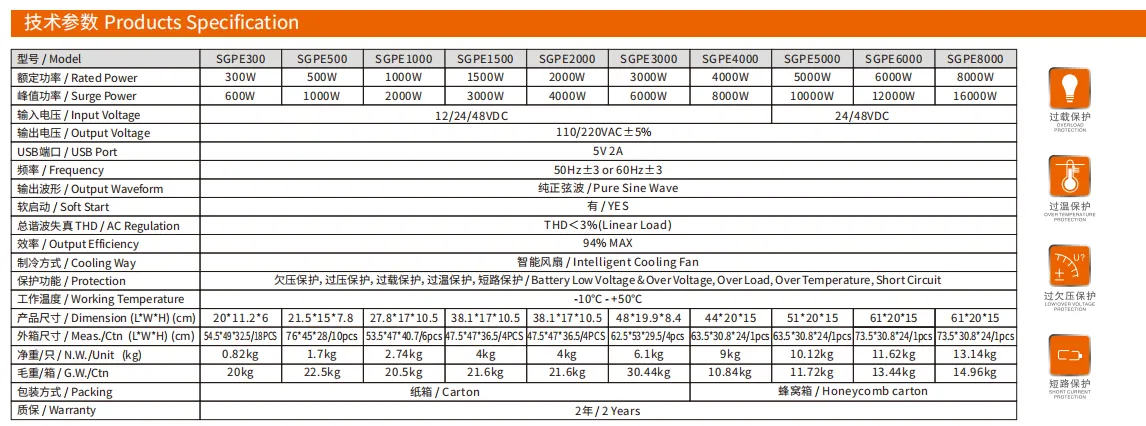
(inverters & converters)
Article Overview
- The Rising Demand for Power Conversion Technology
- Market Growth and Energy Transformation Statistics
- Technical Superiority of Modern Inverters
- Head-to-Head: Leading Inverter Manufacturers Comparison
- Custom Solutions for Residential and Commercial Needs
- Real-World Implementation Case Studies
- Strategic Energy Management with Advanced Converters
The Rising Demand for Power Conversion Technology
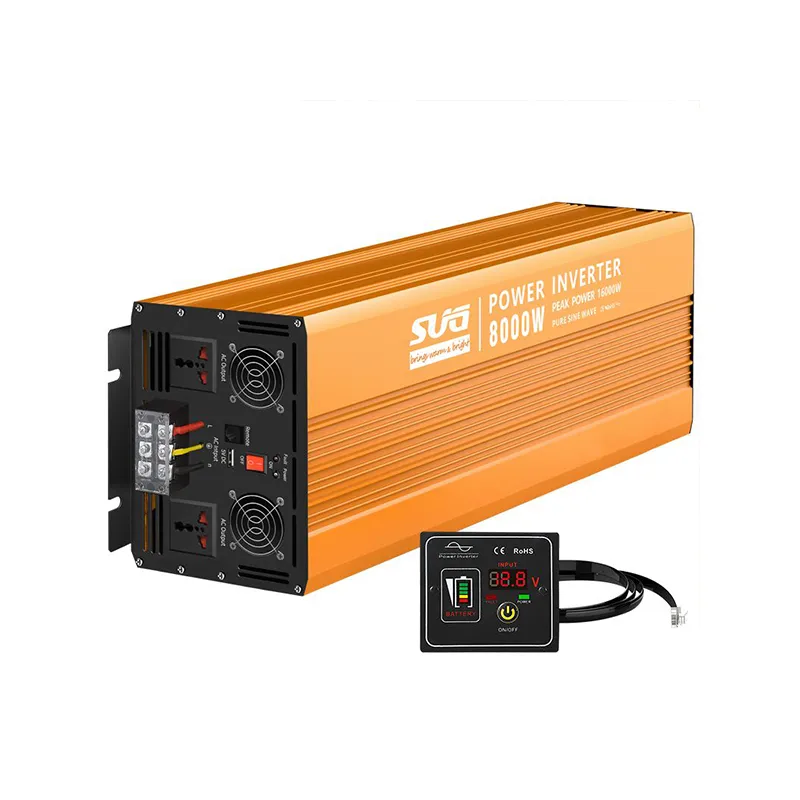
Modern energy systems increasingly rely on efficient power conversion between DC and AC currents. This technology enables homes and businesses to harness solar energy effectively while ensuring compatibility with existing grid infrastructure. The evolution of inverters and converters has accelerated with renewable adoption, particularly in residential solar installations where 3 kW solar inverters dominate. Industrial applications increasingly adopt robust 10 kW solar inverters due to their capacity and scalability.
Power conversion devices now incorporate intelligent functions beyond basic electricity transformation. These systems manage energy flow, optimize battery storage, and interface with smart grids - capabilities crucial for balancing supply and demand. As energy markets decentralize, conversion technology becomes the backbone of sustainable power networks worldwide.
Market Growth and Energy Transformation Statistics
The global inverter market demonstrates remarkable expansion, projected to grow from $12.1 billion in 2022 to $35.8 billion by 2030 at a 14.2% CAGR. This acceleration directly correlates with solar adoption rates that have increased 40% annually since 2018. Residential installations utilizing 3 kW solar inverters now represent 62% of new projects, while commercial implementations featuring 10 kW solar inverters account for nearly 28% of market share.
Modern converters significantly outperform previous generations with efficiency gains directly impacting energy economics. Newer models achieve 98.5% peak efficiency compared to 92% for decade-old units, reducing energy loss by 300-500 kWh annually for average households. Manufacturers report reliability improvements of 40% in Mean Time Between Failures (MTBF), decreasing maintenance frequency and operational costs.
Technical Superiority of Modern Inverters
Contemporary power conversion systems incorporate multiple breakthrough technologies that substantially outperform legacy solutions. Advanced MPPT algorithms extract up to 99% of available solar energy from photovoltaic arrays. Transformerless topologies in both 3 kW and 10 kW solar inverters minimize electromagnetic interference while achieving 97-98.6% conversion efficiency across various loads.
Grid-support functionality represents the most significant advancement, enabling inverters to:
- Automatically regulate voltage and frequency fluctuations
- Provide reactive power compensation during peak demand
- Seamlessly transition between grid-tied and islanded operation
- Detect grid abnormalities in under 2 milliseconds
These capabilities prove particularly valuable for 10 kW solar inverters installed in commercial settings, where power stability significantly impacts operational continuity. Thermal management innovations extend component lifespans by maintaining junction temperatures 15-20°C below critical thresholds.
Head-to-Head: Leading Inverter Manufacturers Comparison
| Specification | Fronius (3kW) | SMA (3kW) | Huawei (10kW) | Sungrow (10kW) |
|---|---|---|---|---|
| Peak Efficiency | 98.2% | 97.8% | 98.6% | 98.4% |
| European Efficiency | 97.0% | 96.5% | 97.9% | 97.6% |
| MPPT Range | 80-480V | 100-480V | 200-800V | 150-750V |
| Max Input Current | 16A | 14A | 26A | 30A |
| Weight (kg) | 18.7 | 21.2 | 38.5 | 42.0 |
| Warranty Period | 10 years | 10 years | 10 years | 12 years |
Analysis reveals Fronius excels in residential 3 kW solar inverters with superior light-load efficiency (92% at 10% capacity versus SMA's 88%). Huawei's 10 kW solar inverters demonstrate unparalleled voltage flexibility, enabling longer strings that reduce balance-of-system expenses by up to 15%. Sungrow maintains a price-performance advantage with similar specifications costing approximately 18% less than premium competitors.
Custom Solutions for Residential and Commercial Needs
Power conversion solutions now adapt to increasingly diverse requirements through modular architecture and software customization. For residential applications, manufacturers bundle 3 kW solar inverters with integrated energy management controllers tailored for:
- EV charging synchronization
- Time-of-use optimization
- Emergency power reserves configuration
- Hybrid generator integration
Industrial 10 kW solar inverters feature expanded capabilities including parallel operation supporting up to 20 units concurrently with precise power-sharing tolerance within 0.5%. This enables scalable installations from 10 kW to multi-megawatt capacities using identical hardware platforms. Specialized firmware versions now serve niche applications such as:
- Microgrid formation with black start capability
- Agricultural pumping systems requiring variable frequency drives
- Voltage stabilization in weak-grid rural environments
- Regulatory compliance across multiple jurisdictions
Real-World Implementation Case Studies
Project: Urban Hospital Backup System (California)
Replaced aging generators with 42 parallel 10 kW solar inverters paired with 1.2 MWh battery storage. Results:
- 60% reduction in generator fuel consumption during grid outages
- Uninterrupted MRI operation through 8-hour power failure
- $15,200 monthly savings through peak shaving
Project: Multi-family Housing Retrofit (Berlin)
Installed 218 units of 3 kW solar inverters with individual metering:
- Increased tenant solar self-consumption from 32% to 67%
- Reduced grid dependence during evening peak by 41%
- Achieved full payback in 5.3 years without subsidies
Strategic Energy Management with Advanced Converters
Power conversion technology represents the critical intersection between renewable generation and practical energy utilization. Sophisticated inverters and converters enable holistic energy management beyond basic electricity conversion. Modern implementations autonomously analyze consumption patterns, weather predictions, and tariff structures to optimize financial outcomes without user intervention.
The strategic value of quality conversion technology increases with installation complexity. A premium 10 kW solar inverter with integrated controls provides system-level benefits far exceeding component costs. The evolution continues toward self-healing systems that automatically reroute power flows during equipment failures. These developments cement inverters and converters as essential components driving the global energy transition toward sustainability and resilience.
(inverters & converters)
FAQS on inverters & converters
Q: What is the difference between 3 kW and 10 kW solar inverters?
A: A 3 kW solar inverter is ideal for small residential systems, while a 10 kW inverter supports larger energy demands, such as for medium-sized homes or commercial setups. The capacity determines how much solar energy can be converted and used.
Q: Are inverters and converters the same thing?
A: No. Inverters convert DC power from solar panels to AC power for home use, while converters typically transform AC to DC or adjust voltage levels. Both serve distinct roles in energy systems.
Q: How efficient are modern 10 kW solar inverters?
A: High-quality 10 kW solar inverters achieve efficiency ratings of 97-99%. Advanced designs minimize energy loss and include features like maximum power point tracking (MPPT) for optimal performance.
Q: Can a 3 kW solar inverter work with grid-tied systems?
A: Yes, most 3 kW inverters are compatible with grid-tied systems. They often include safety certifications like UL 1741 and IEEE 1547 to ensure seamless integration with the utility grid.
Q: What maintenance do solar inverters and converters require?
A: Solar inverters and converters need minimal maintenance, such as periodic cleaning and ensuring proper ventilation. Monitoring software can alert users to performance issues or faults for timely repairs.
-
Designing a Modern Home Roof Made Out of Solar Panels GuideNewsApr.16,2026
-
Guide to the Size of 150 Watt Solar Panel for Your ProjectNewsApr.09,2026
-
Understanding the Dimensions and Applications of a 200W Solar PanelNewsApr.07,2026
-
Understanding the Dimensions and Factors of a 330W Solar Panel SizeNewsApr.04,2026
-
Understanding the Size and Dimensions of a 4kW Solar Panel System for Your HomeNewsMar.31,2026
-
Comprehensive Guide to Sizing Your Solar System for Optimal Energy ProductionNewsMar.28,2026