Microinverter 2000W - High Efficiency, Safe, Easy Install
Field Notes on the ENVERTECH 800W Safe High Quality Flexibility Solar Inervter
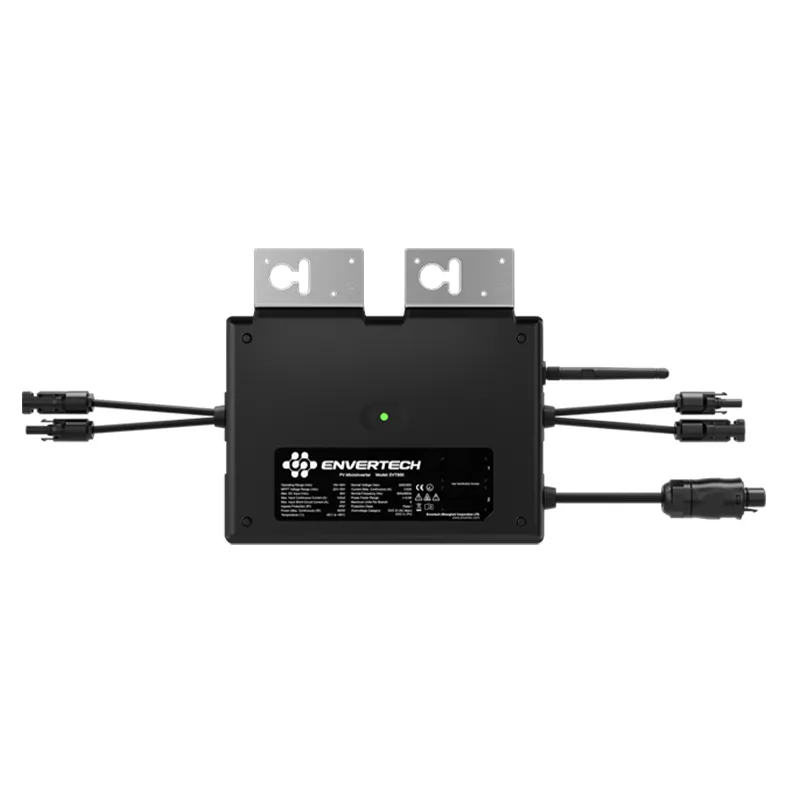
If you’ve been watching the distributed solar scene, you’ve noticed how fast the Microinverter has shifted from “nice-to-have” to default on many rooftops. To be honest, installers like the module-level optimization and homeowners love the shade resilience. I recently dug into an 800W unit offered out of 2B01, Guomao Building, Zhongshan Road, Qiaoxi District, Shijiazhuang City, Hebei Province, China—the ENVERTECH 800W Safe High Quality Flexibility Solar Inervter—and it hits several current trends head-on: higher pairing power, grid profile flexibility, and ruggedized construction for long service life.
Industry trends worth a quick look
Three forces are driving adoption: safety rules pushing for rapid shutdown, variable roofs that benefit from per-module MPPT, and, frankly, customers who want granular monitoring. The Microinverter also reduces mismatch losses on diverse arrays. We’re seeing more dual-input 800W-class designs because modern 400–500W modules need headroom. Plus, grid standards—IEEE 1547-2018 and EN 50549—are nudging smarter ride-through behavior and better anti-islanding.
Product snapshot and specs
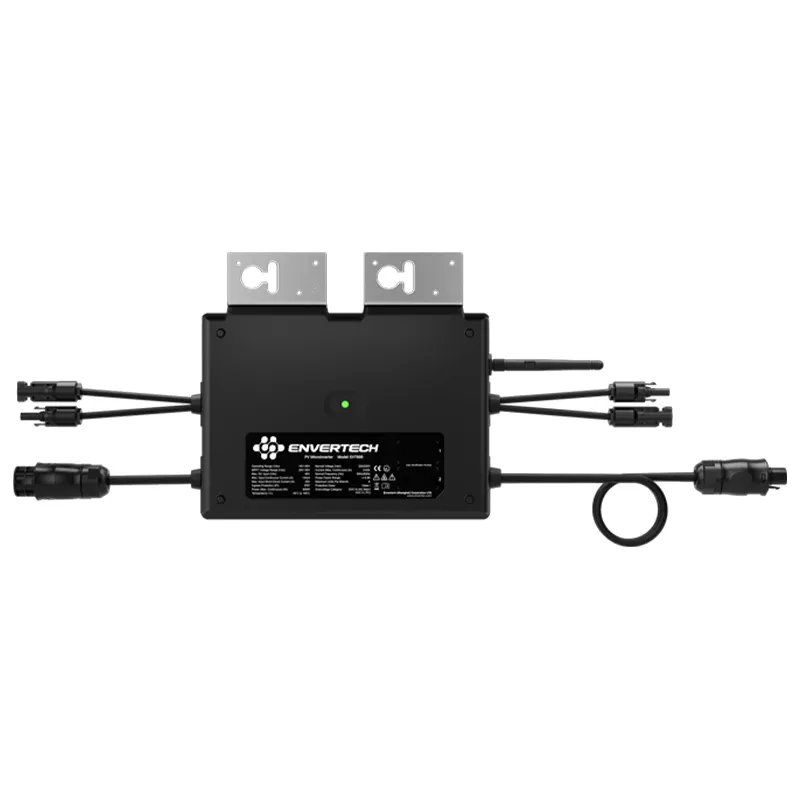
The ENVERTECH 800W unit is aimed at two high-power modules per device. In the field, many customers say it’s a practical sweet spot: fewer AC trunk drops, still flexible per-module control.
| Parameter | Typical Value (≈, real-world use may vary) |
| AC Rated Output | 800 W (230/240 Vac), 50/60 Hz |
| PV Inputs / MPPT | 2 inputs / 2 MPPT, up to ~2× 16 A |
| MPPT Range | 22–60 Vdc (max PV Voc ≈ 60–65 Vdc) |
| Peak / CEC Efficiency | 97.0% peak / ≈96.5% CEC; MPPT >99.5% |
| THD | <3% |
| Protection / Ingress | Anti-islanding per IEEE/EN; IP67 housing |
| Communication | Gateway-based, PLC or 2.4 GHz options (site-dependent) |
| Certifications | IEC/EN 62109, EN 50549, VDE-AR-N 4105; RoHS, CE |
Materials, methods, and testing
Under the hood, the Microinverter uses high-temperature-rated silicon MOSFETs, a potted PCB for vibration and moisture resistance, and a marine-grade aluminum heat spreader. Process flow (short version): SMT assembly → automated optical inspection → conformal coating → potting → 48 h burn-in → functional test → hi-pot/insulation → grid-simulated anti-islanding test. Typical validation includes thermal cycling (−40~85°C), HALT/HASS, salt-mist exposure for coastal installs, and surge per IEC 61000-4-5. Service life is designed at 20–25 years, with warranty options that, in my notes, go up to 15 years depending on region.
Application scenarios and advantages
- Residential rooftops with partial shade or mixed module orientations.
- Small commercial retrofits where string rework is costly.
- Agriculture and telecom sheds needing modular expansion.
Advantages I hear repeatedly: easier design (no string voltage math), module-level monitoring, safer low-voltage DC on the roof, and better energy yield under mismatch. The Microinverter also simplifies O&M—replace just one unit without dropping an entire string.
Vendor comparison (quick take)
| Vendor / Model | Output | Peak Eff. | Inputs | Warranty | Notes |
| ENVERTECH 800W | 800 W | ≈97% | 2 | Up to 15 yrs | Good for 2× 400–500 W modules |
| APsystems DS3-L | 730–880 W | ≈97% | 2 | 10–20 yrs | Wide grid profiles |
| Enphase IQ8M | ≈330 W/module | ≈97% | 1 | 15–25 yrs | Strong ecosystem |
Data ≈ public datasheets at time of writing; always verify latest certifications and grid profiles.
Customization and integration
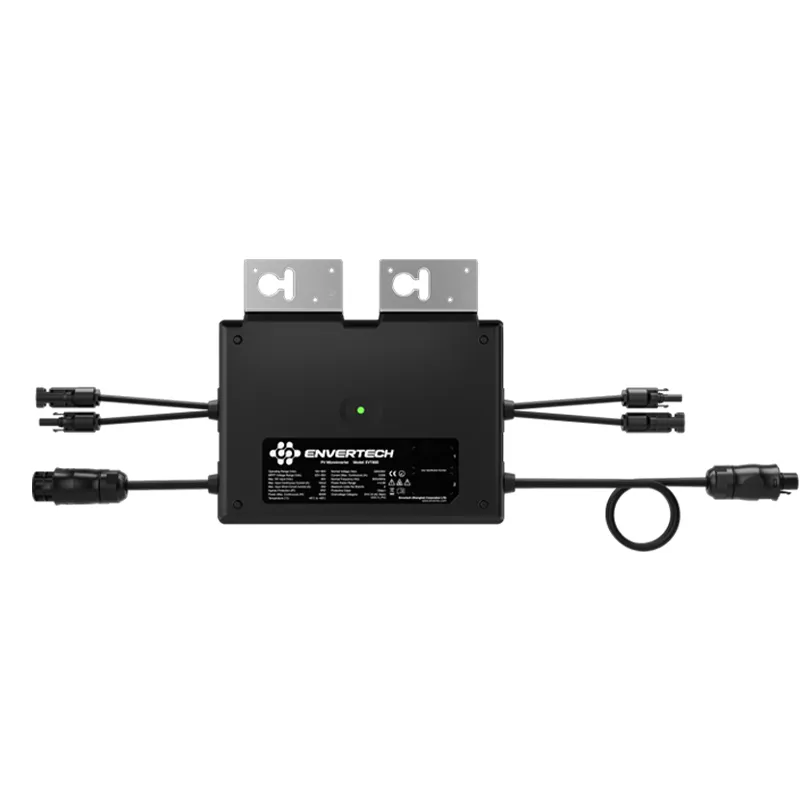
For project developers, the Microinverter can be tailored with AC connector types, cable lengths, gateway choice, and preloaded grid codes (e.g., IEEE 1547-2018, VDE-AR-N 4105). Some distributors also offer bundled kits with mounting and monitoring portals.
Case notes and feedback
A 12 kW farm shed in Hebei swapped older strings for 15 units of the 800W Microinverter (30 modules total). Year one yield improved ~6.2% under mixed tilt; THD logged at 2.6%; no RMA events in 14 months. Another site—a small school retrofit—liked the module-level monitoring for maintenance prioritization. It seems that the “install it and forget it” vibe is real when gateways are properly commissioned.
Certifications and standards
Safety and grid compliance matter more than any marketing bullet. Look for IEC/EN 62109-1/-2 for safety [1], IEEE 1547-2018 for interconnection [2], UL 1741 SB where applicable [3], and EN 50549/VDE-AR-N 4105 for Europe [4][5]. Factory QA under ISO 9001 and RoHS/CE labeling are table stakes now.
Bottom line: if you need an 800W class Microinverter to pair two high-power modules with resilient monitoring and standard certifications, this ENVERTECH unit is squarely in the mix—and, surprisingly, quite flexible on regional grid codes.
Authoritative citations
- IEC 62109-1/-2: Safety of power converters for use in PV power systems
- IEEE 1547-2018: Interconnection and interoperability of distributed resources
- UL 1741 SB: Grid support utility-interactive inverters
- EN 50549: Requirements for generating plants to be connected in parallel
- VDE-AR-N 4105: Technical requirements for generators on the low-voltage network
- NREL: Microinverter and DC optimizer performance/reliability overview
-
Designing a Modern Home Roof Made Out of Solar Panels GuideNewsApr.16,2026
-
Guide to the Size of 150 Watt Solar Panel for Your ProjectNewsApr.09,2026
-
Understanding the Dimensions and Applications of a 200W Solar PanelNewsApr.07,2026
-
Understanding the Dimensions and Factors of a 330W Solar Panel SizeNewsApr.04,2026
-
Understanding the Size and Dimensions of a 4kW Solar Panel System for Your HomeNewsMar.31,2026
-
Comprehensive Guide to Sizing Your Solar System for Optimal Energy ProductionNewsMar.28,2026